Best Material for Front Door: Aluminum vs Steel, Wood, and Fiberglass
Aluminum, steel, wood, and fiberglass are all common front-door materials, yet none is right for every project. Finding the best material for front door applications means balancing appearance and upkeep with climate, security, insulation, entrance size, design, and budget. This guide compares the four material options so you can evaluate front doors for residential, hospitality, and commercial projects against clearer selection criteria.
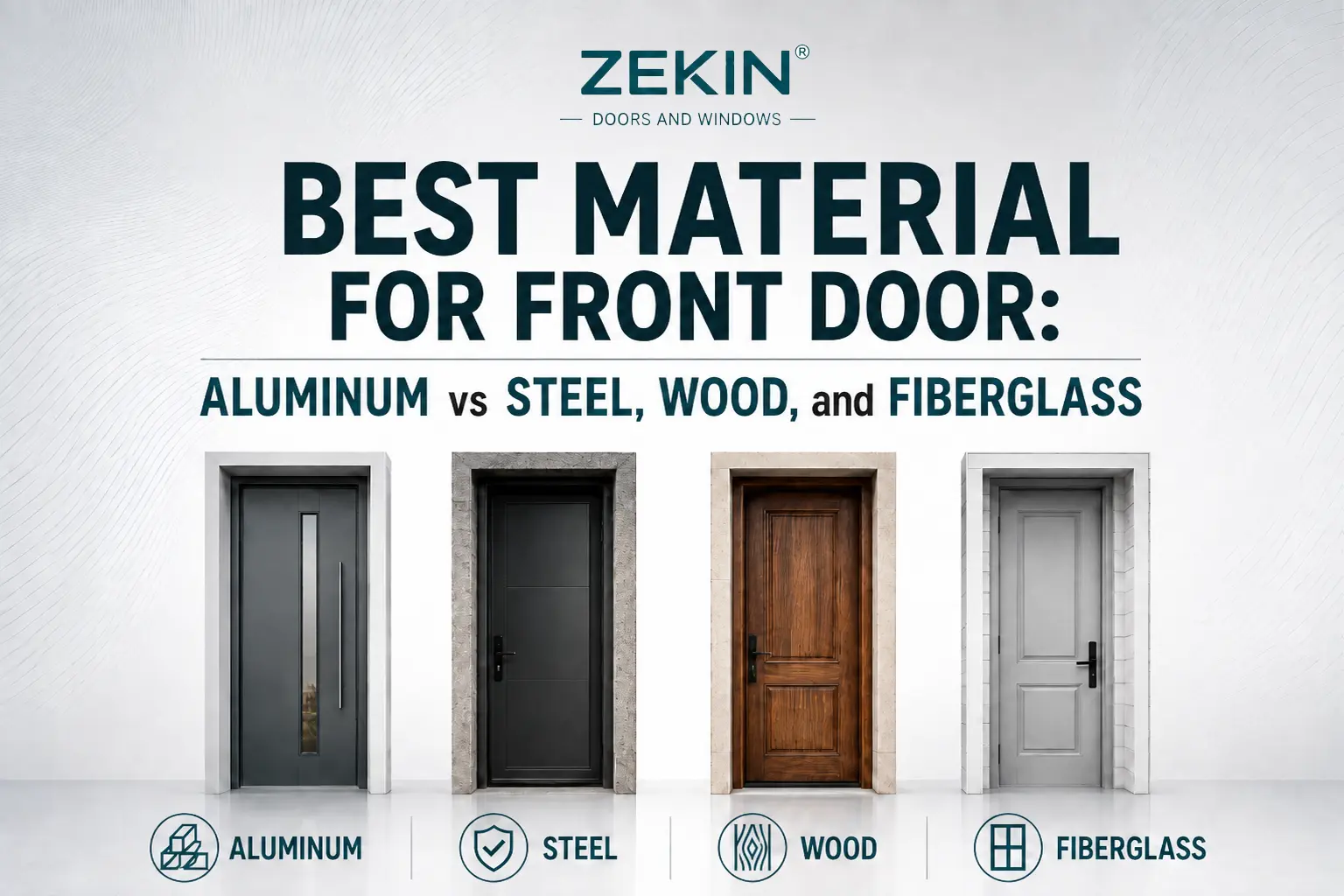
Front Door Materials: A Quick Comparison
| Factor | Aluminum | Steel | Wood | Fiberglass |
|---|---|---|---|---|
| Weather resistance | Strong corrosion resistance with a suitable alloy and finish | Good durability when protective coatings remain intact; damaged finishes may require attention | Depends on sealing and finish care | Good resistance to moisture |
| Thermal performance | Can combine thermal-break profiles, insulated cores, seals, and glazing | Commonly paired with an insulated core | Natural insulating properties; whole-door performance varies | Commonly paired with insulated cores |
| Maintenance | Low routine maintenance with a durable finish | Finish condition needs periodic attention | Usually requires more regular finish care | Generally low maintenance |
| Design and customization | Highly flexible for custom sizes, colors, glass, and pivot formats | Well suited to solid, rigid designs | Natural grain and traditional detailing | Painted and wood-look finishes |
| Cost | Varies with size, finish, glass, hardware, and configuration | Varies with gauge, core, finish, glass, and hardware | Varies with species, construction, finish, and custom detailing | Varies with core, finish, glazing, hardware, and design |
| Typical applications | Modern villas, hospitality, commercial, and custom entrances | Entrances prioritizing rigidity and solid construction | Traditional or premium residential entrances | Lower-maintenance residential entrances |
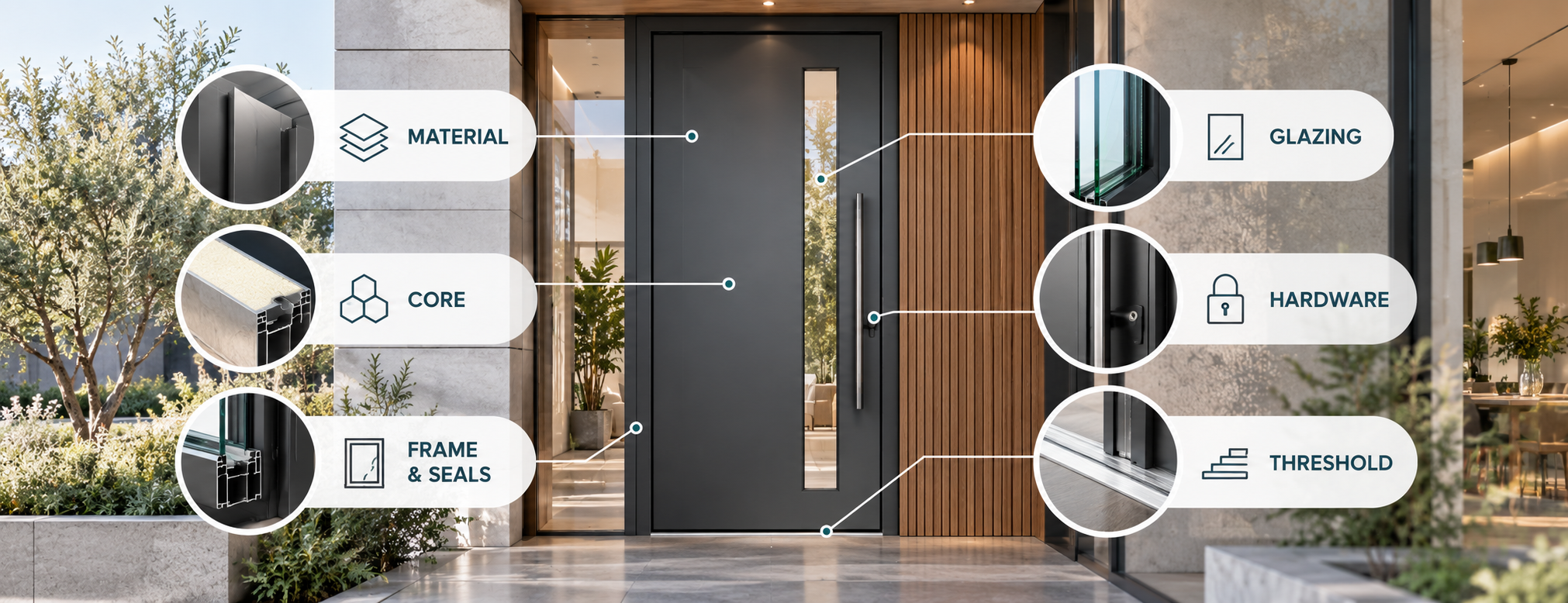
Complete door construction matters as much as the exterior material when choosing the best material for front door applications. Core, frame, seals, threshold, glazing, locking hardware, and installation all shape real-world performance. These material differences become more meaningful when considered against specific project requirements.
Which Front Door Material Works Best for Different Projects?
There is no universal winner. The best material for front door projects depends on what the entrance needs to do and how it fits the building.
Aluminum for Modern and Custom Entrances
Aluminum is especially useful when a project needs architectural impact and flexibility in the same entrance. It suits modern villas, hotels, residential developments, and commercial properties that call for custom dimensions, large openings, pivot configurations, or glass integration. Its favorable strength-to-weight ratio supports larger formats, while suitable alloys and surface treatments work well for exposed or humid locations.
Aluminum also gives design teams broad control over appearance. Custom colors, wood-grain or metallic finishes, glass proportions, and hardware can be coordinated with the facade, which is valuable when multiple openings need a consistent project finish.
Steel for Rigidity-Focused Applications
Steel is a strong option where rigidity, impact resistance, and a substantial door feel are priorities. Because both materials are common metal choices for durable exterior entrances, aluminum vs steel doors is a frequent comparison in commercial and security-conscious projects. Aluminum offers lower weight and strong corrosion resistance, while steel is generally favored for higher-stiffness constructions and needs more attention to protective finishes in exposed conditions.
Wood for Natural and Premium Design
Wood is well suited to entrances where natural grain, stain, craftsmanship, or traditional architecture is central to the design. It remains common in premium residential projects, although exterior sealing and finish maintenance need to match local moisture and weather exposure.
Fiberglass for Lower-Maintenance Residential Entrances
Fiberglass works well for many standard residential entrances that prioritize lower maintenance and insulated construction. It can also provide painted or wood-look surfaces without the same finish-care routine as exposed timber. Final thermal performance still depends on the complete product configuration, especially the core, frame, seals, threshold, and glazing.
In practice, project type narrows the field; site conditions decide whether that material remains the right fit.
How to Evaluate Front Door Materials for Your Project
Before finalizing the material choice, check the shortlist against the actual building conditions.
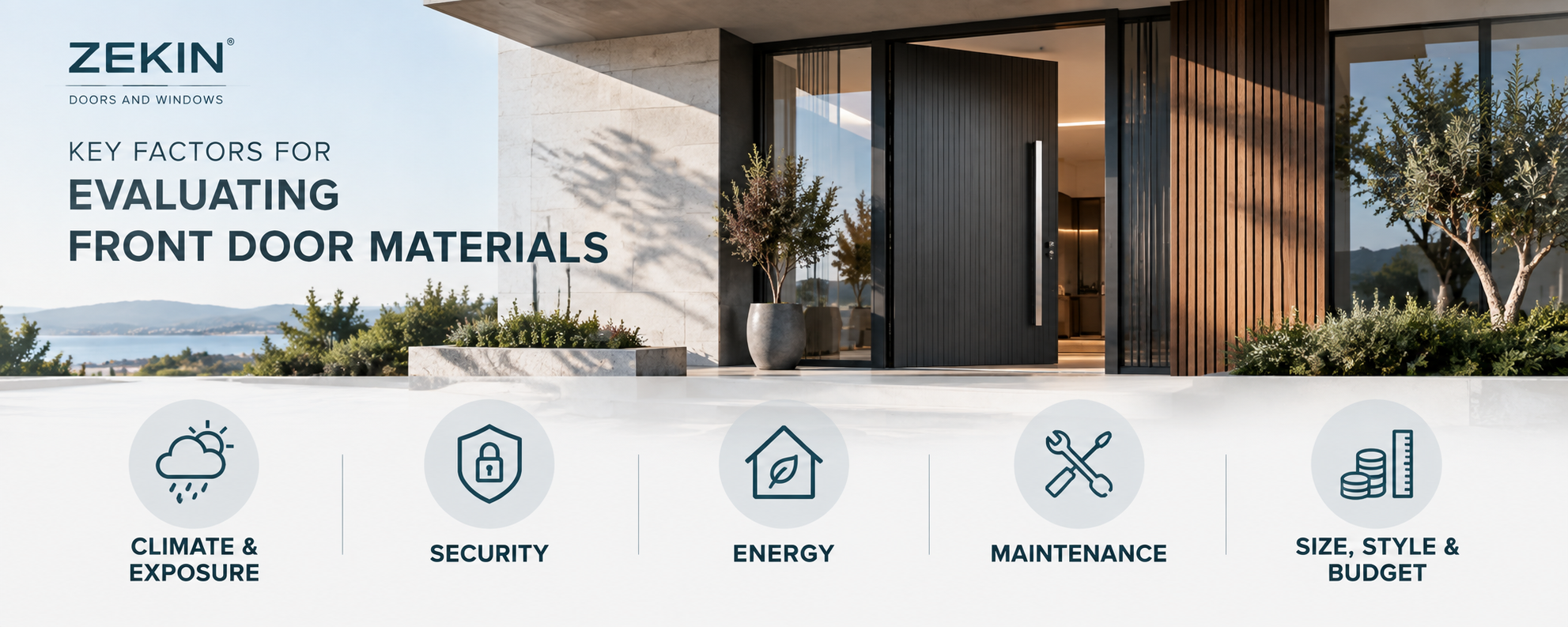
- Climate and exposure. Covered and fully exposed entrances face different demands. Rain, humidity, strong sun, or coastal salt can increase the importance of corrosion resistance, surface treatment, sealing, drainage, and hardware selection.
- Security. The best front door material for security is not defined by the door skin alone. A secure entrance depends on the slab and core, frame anchoring, lock and strike connection, hinges, glazing protection, and installation quality.
- Energy performance. Thermal results come from the whole assembly. Core construction, frame design, thermal separation, perimeter seals, threshold, and glazing all matter. U-factor is useful for comparing whole-door heat transfer, while SHGC becomes relevant when the door includes glazing.
- Maintenance. Finish care should match the exposure level and property management needs. Low-maintenance finishes can be especially useful for multi-unit, hospitality, and commercial projects.
- Dimensions, style, and budget. Single, double, pivot, oversized, and entrances with large glazed areas place different demands on frames, hardware, installation, and cost. Compare the complete installed specification rather than the door-skin price alone.
Once these conditions are clear, the material choice can be converted into clear ordering requirements.
What Front Door Specifications Should You Confirm Before Ordering?
After choosing the best material for front door use, a precise specification makes quotations easier to compare and gives the manufacturer a clear basis for engineering and customization.
- Size and configuration. Confirm the rough opening, slab dimensions, single, double, or pivot configuration, and opening direction.
- Door construction. Define the exterior material, internal core, frame, threshold, and thermal separation where required.
- Glass and security hardware. Confirm glass dimensions and privacy level, safety or Low-E glass where needed, lock type, hinges, handles, and strike components.
- Weather protection and finish. Specify perimeter seals, threshold sealing, drainage, surface treatment, and the required color or finish.
- Documents and logistics. Clarify product-specific test or compliance documents where applicable, packaging, delivery requirements, and installation responsibility.
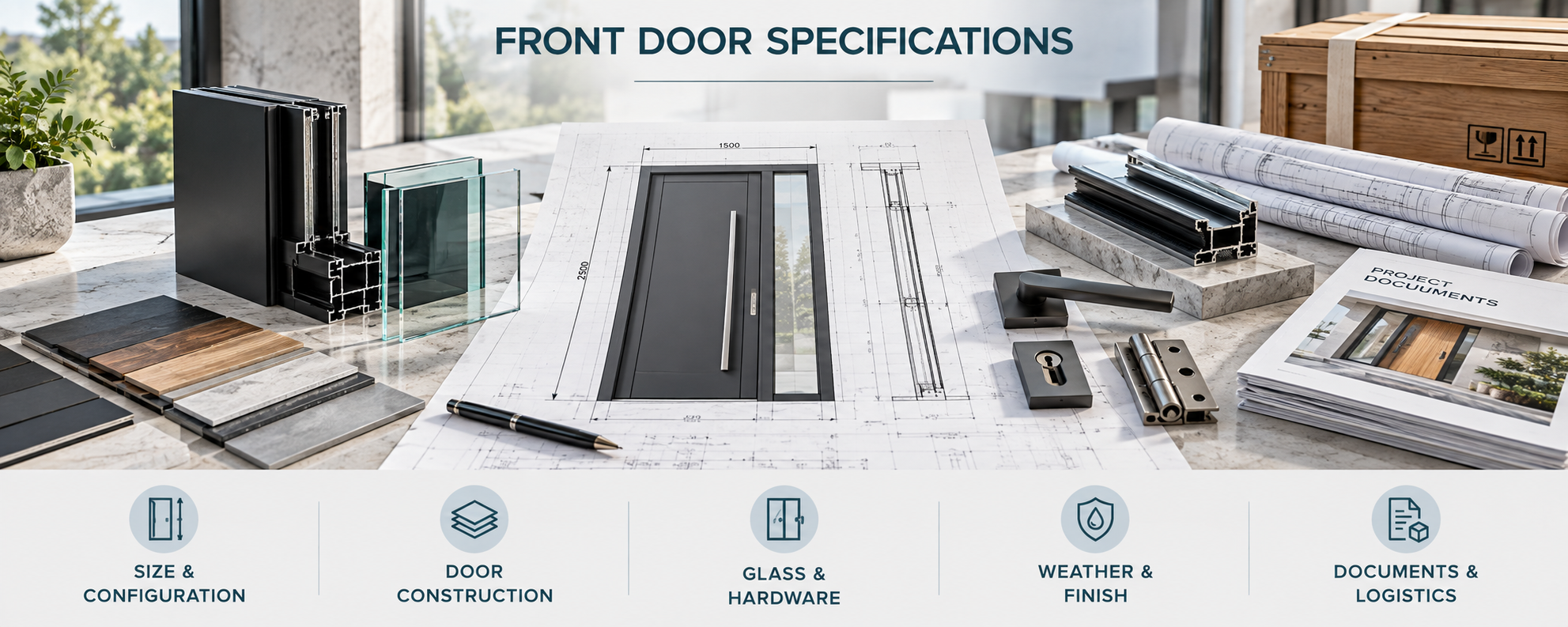
For straightforward openings, standard sizes and finishes may be sufficient. Oversized entrances, integrated glass, project-specific colors, or particular performance requirements often call for closer coordination with the manufacturer.
Considering an Aluminum Front Door? Explore ZEKIN’s Custom Entry Options
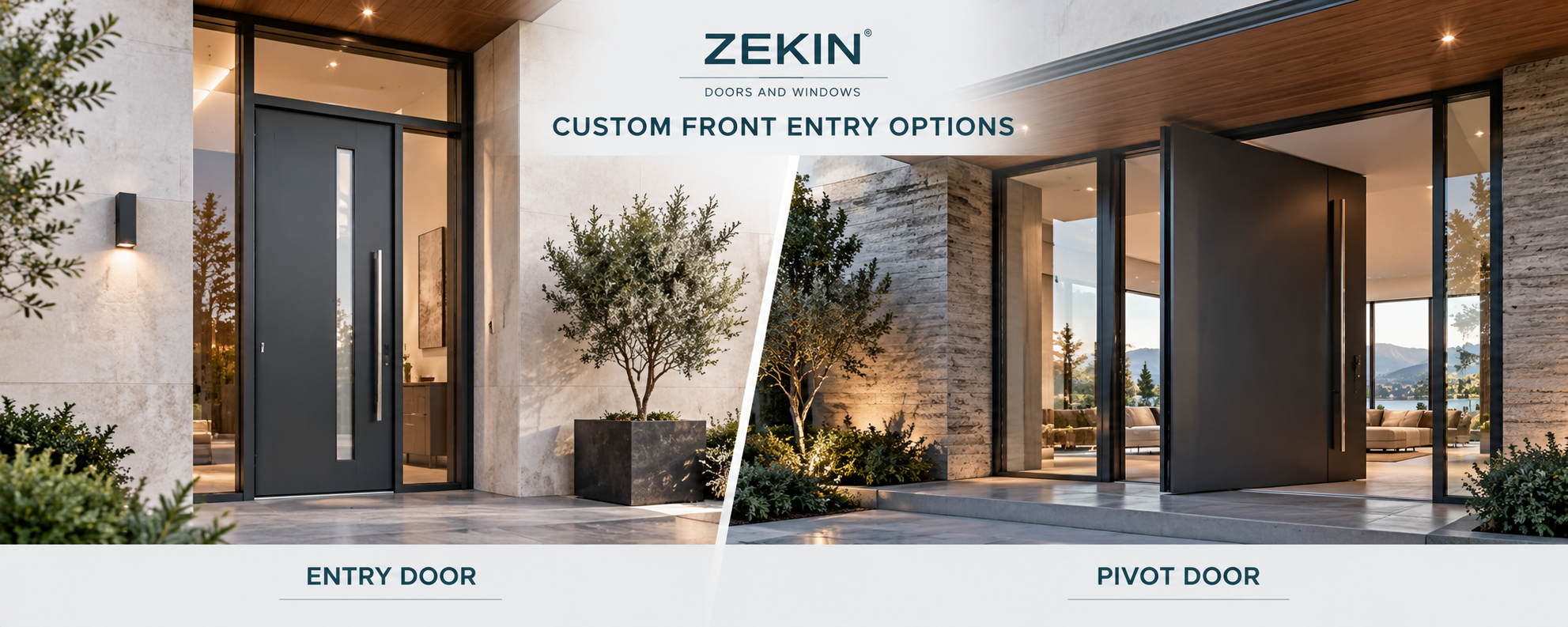
For projects that point toward aluminum, ZEKIN can turn the specification into a configurable front-entry package rather than a fixed catalog choice. Our current front-entry range includes entry doors and pivot doors, with options that can be coordinated around project dimensions and design requirements.
| ZEKIN Option | What Can be Configured | Project Fit |
|---|---|---|
| Entry Door | Size, color and finish, glass, hardware, and opening details | Modern residential, villa, hospitality, and commercial project entrances |
| Pivot Door | Custom or larger dimensions, pivot configuration, glass integration, finish, and hardware | Statement entrances and contemporary large openings |
ZEKIN is a Chinese window and door manufacturer with more than 18 years of industry experience, supported by a 300,000㎡ production base and a presence in more than 60 countries. For custom entry-door projects, we place particular emphasis on material quality, surface treatment, color customization, and consistent specification control.
If you are a distributor, builder, or developer sourcing aluminum entry doors for a villa, residential development, hotel, or commercial project, contact us with your specifications so we can develop a suitable custom configuration for your project.