New Construction Windows: How to Choose the Best Types and Materials
New construction gives project teams more freedom to shape window openings, but it also creates more room for costly mismatches. A window may suit the facade yet fall short on ventilation, thermal performance, or installation fit. For project teams and window buyers, the challenge is to find a window package that fits the design and wall construction while meeting climate, performance, and budget goals. This guide explains how installation method, operating type, frame material, and project specifications work together.

New Construction Windows vs Replacement Windows: What Is the Difference?
| Factor | New Construction Windows | Replacement Windows |
|---|---|---|
| Typical application | New buildings, additions, and major renovations | Existing buildings |
| Opening condition | Framing or the wall assembly is exposed | The opening and surrounding finishes already exist |
| Installation | Fin, block frame, or project-specific system | Pocket insert or full-frame replacement |
| Design flexibility | More freedom to change size, shape, and location | Usually influenced by the existing opening |
| Main coordination | Framing, flashing, weather barrier, and wall interface | Existing-frame condition and retained finishes |
This distinction shapes how the window connects with the surrounding wall and how much design freedom the project allows. With the installation context settled, each opening can be matched to the way the room needs to function.
What Are the Best Window Types for New Construction Projects?
The best windows for new construction depend on what each space needs most: stronger ventilation, a clearer view, an opening that stays clear of walkways, or greater flexibility. These priorities lead to four practical groups of window types:
Casement and Awning Windows for Ventilation
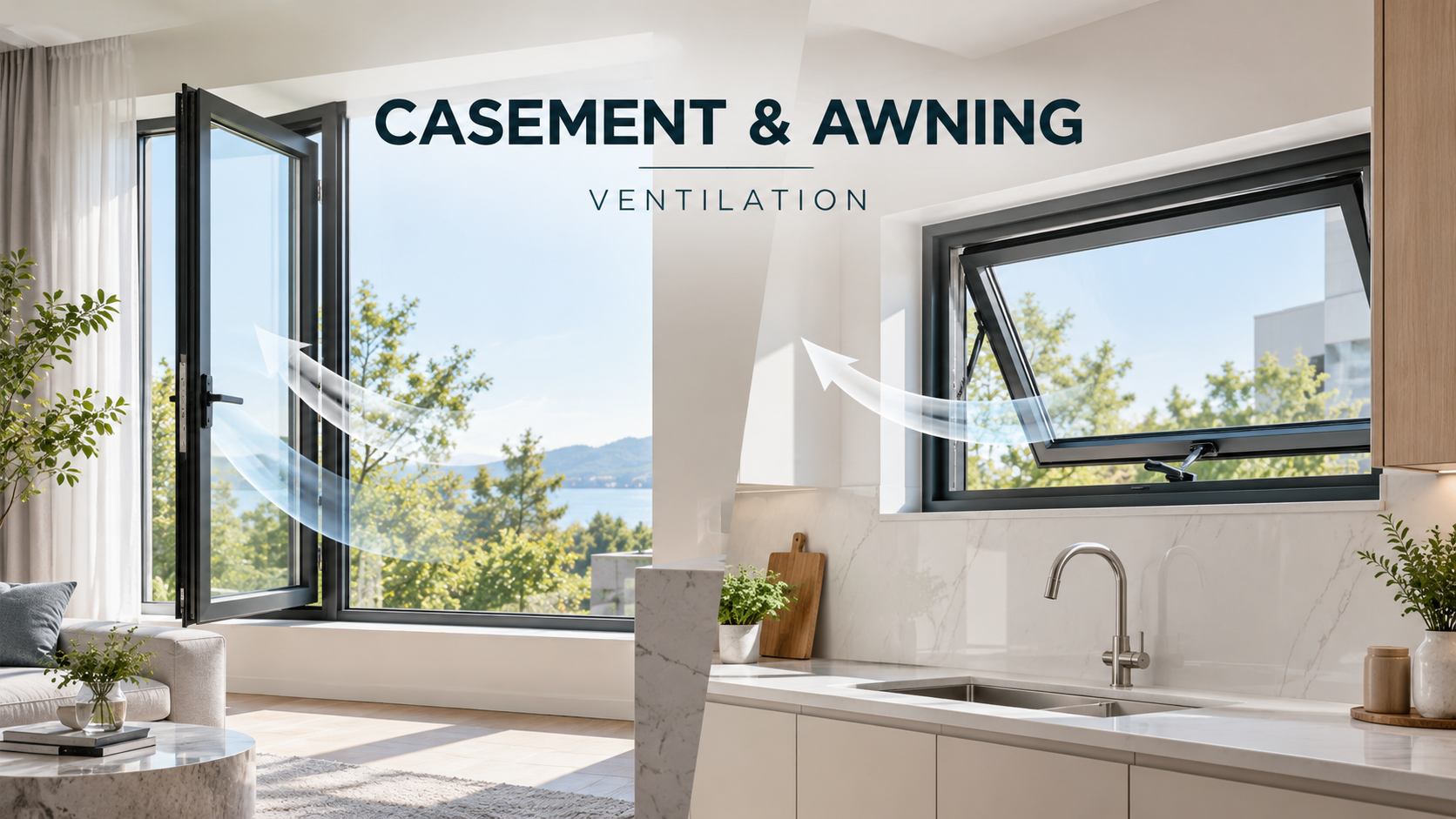
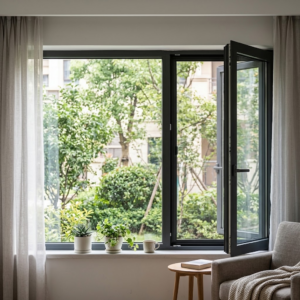
When ventilation matters most, casement windows and awning windows are strong options. Casement sashes open from the side, while awning sashes hinge at the top and suit kitchens, bathrooms, or higher wall positions. Because both press against the frame when closed, they generally leak less air than sliding types. Exterior clearance, wind, screens, and cleaning access still need to fit the room.
Sliding and Hung Windows for Space-Saving Operation
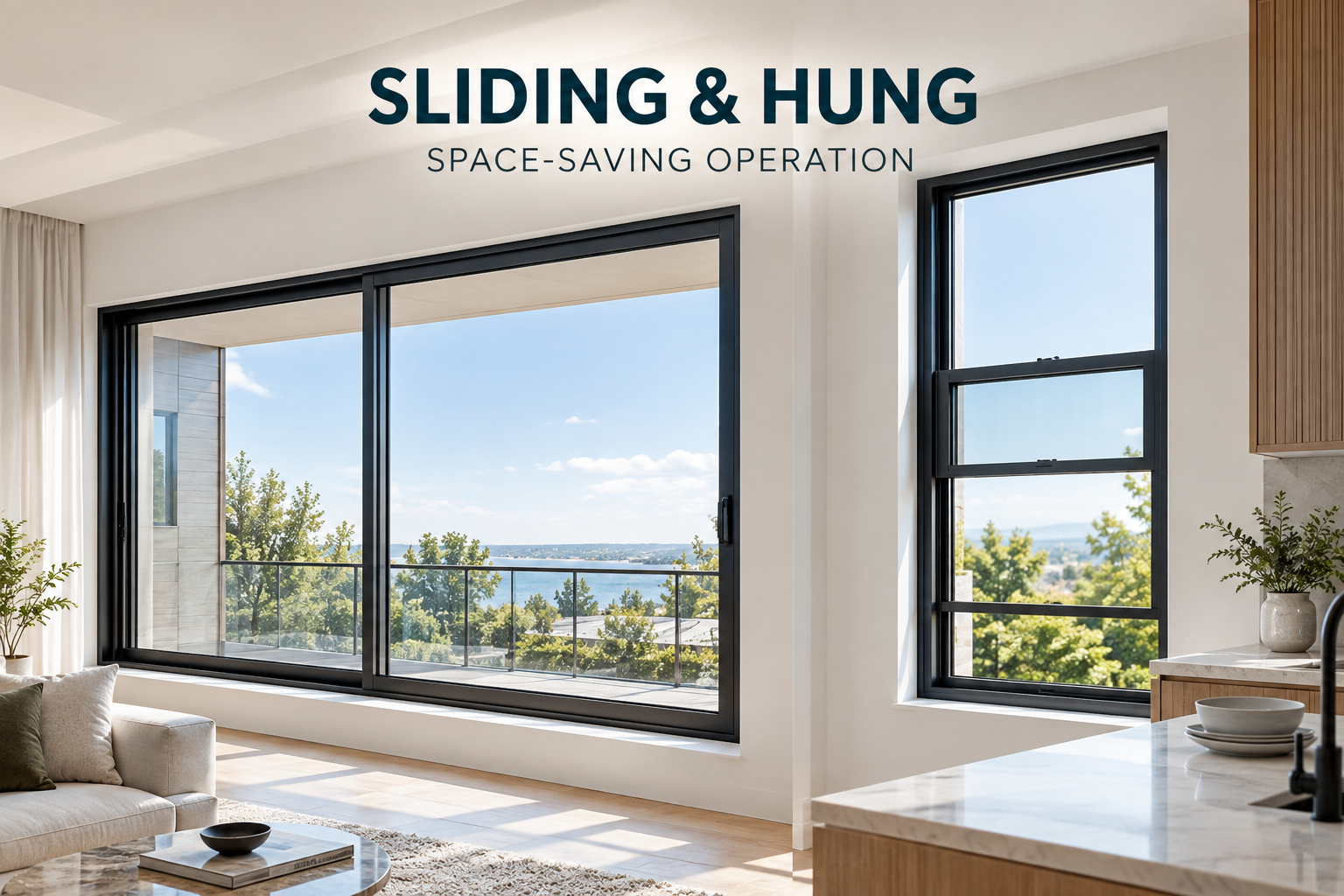
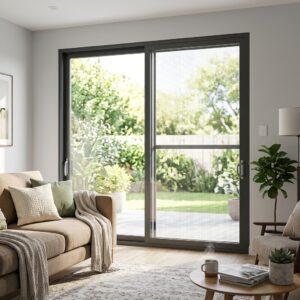
Sliding windows and hung windows keep sash movement within the frame, which helps near walkways, balconies, and other tight areas. Horizontal sliders suit wider openings, while single- and double-hung windows fit vertical proportions and traditional facades. Buyers should compare movable sashes, track access, drainage, and weather seals, since these details shape daily use.
Fixed Windows and Skylights for Daylight
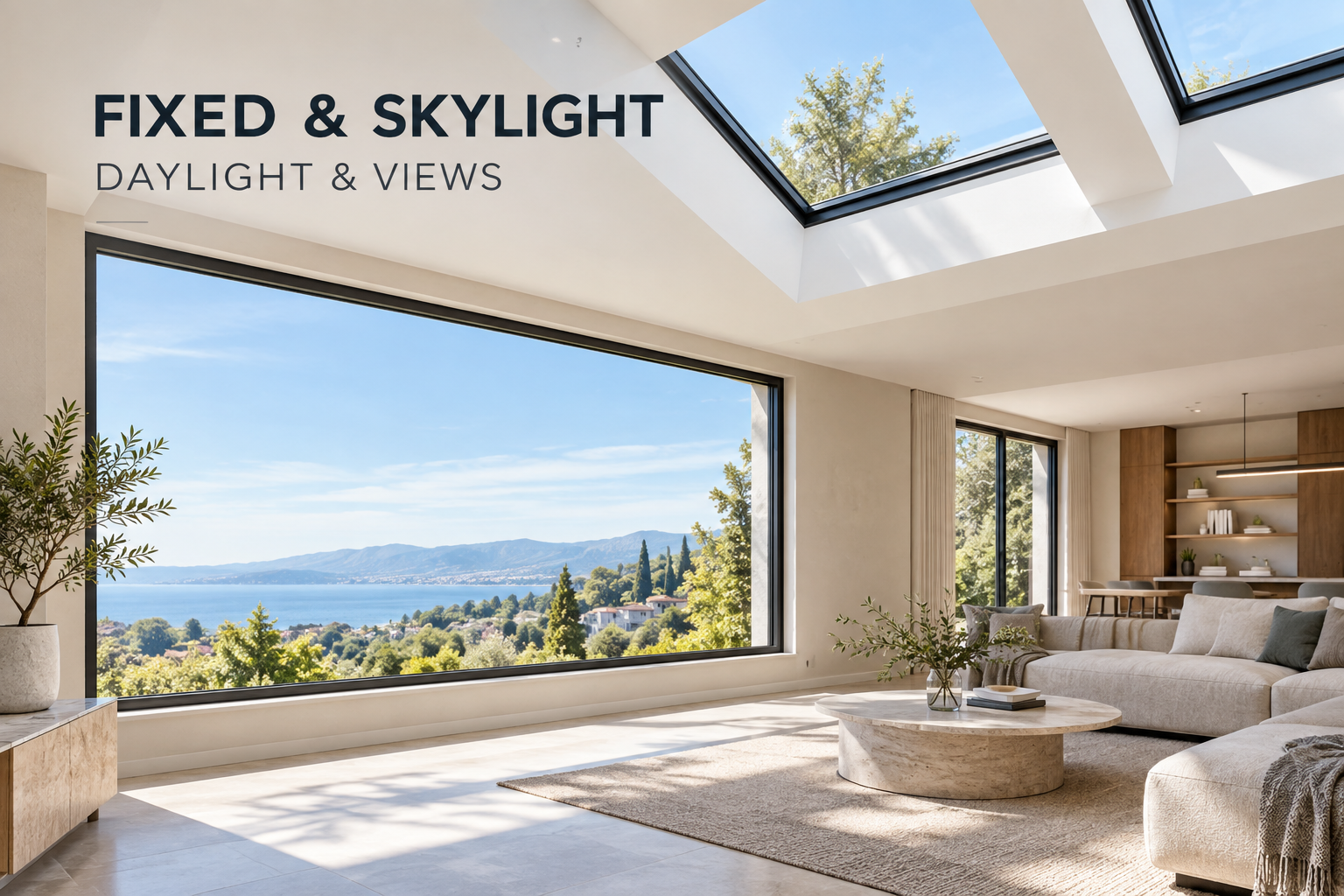
Where daylight and views take priority, fixed windows create broad, uninterrupted glazed areas and can be paired with operable units for ventilation. They should not be used alone where ventilation or a code-required emergency escape opening is needed.
Skylight windows bring light into areas away from exterior walls, but their roof position requires closer coordination of slope, flashing, water management, solar control, and maintenance access.
Tilt-and-Turn and Folding Windows for Flexible Openings
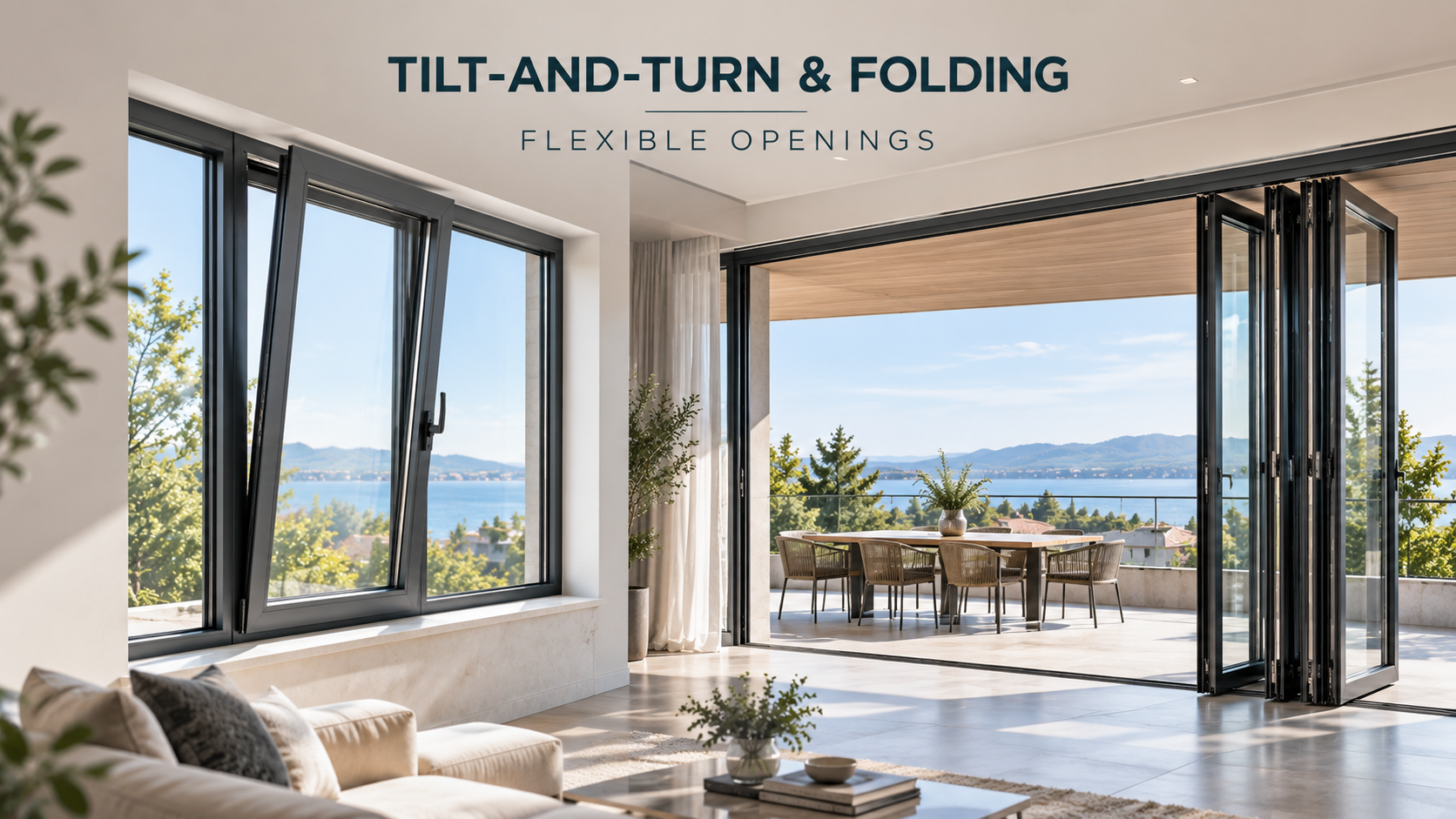
Tilt-and-turn windows combine two useful modes: a top tilt for gentle ventilation and an inward swing for wider access and easier cleaning. This suits apartments, hotels, and other projects where daily operation and maintenance need to work together.
Folding windows use linked panels that can stack to the side, creating a broad connection between spaces such as a kitchen and terrace or a service counter and dining area. Tracks, drainage, panel count, hardware, and stacking space should be resolved early in the drawings.
Once the operating style is clear, the focus shifts from how the window opens to which frame material best suits the project.
Which Window Frame Material Is Best for New Construction?
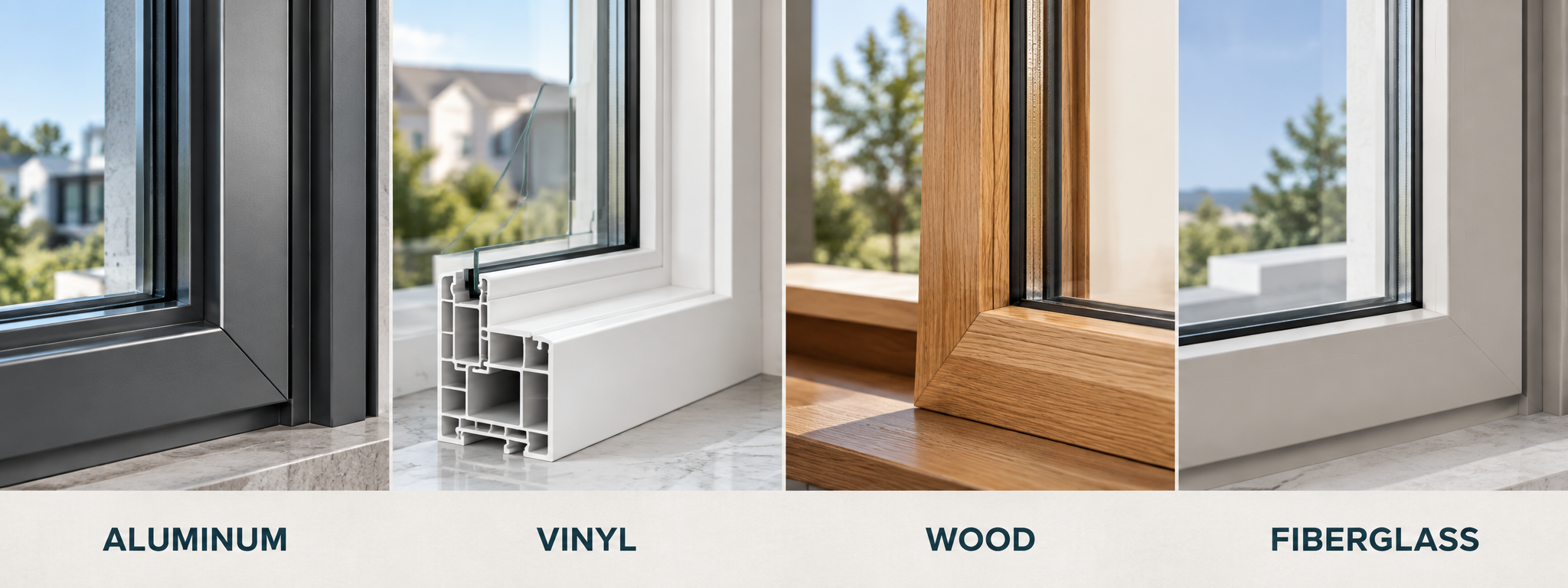
No frame material suits every project. Each material responds to a different project need, so the more useful question is which types of buildings and applications it suits best.
| Material | Main Strengths | Best Suited To | Why It Fits |
|---|---|---|---|
| Aluminum | Strong and lightweight; supports slim profiles, custom finishes, and many larger window configurations | Modern homes, multifamily developments, hotels, commercial buildings, and custom openings | Offers the design flexibility and structural capacity needed for clean lines and broader openings. |
| Vinyl | Moisture-resistant, low-maintenance, and naturally less conductive than metal | Standard residential projects and cost-conscious housing developments | Works well for repeatable residential openings where simple upkeep and thermal performance are priorities. |
| Wood | Natural appearance and good insulating performance | Traditional, heritage-style, and premium residential projects | Adds warmth and architectural detail where the frame contributes to the interior character. |
| Fiberglass | Strong, durable, and dimensionally stable; cavities may be insulated | Custom homes and projects prioritizing durability and long-term stability | Suits projects that value stable frames and relatively low maintenance over time. |
The right choice is the material that best supports the building type, design intent, maintenance expectations, and budget. From there, the selected frame can be carried into a project-ready window specification.
For a closer comparison of two common frame choices, see ZEKIN’s guide to vinyl vs aluminum windows.
How to Choose New Construction Windows for Your Project
A clear window schedule turns the earlier choices into a coordinated project specification. For each opening, it should connect room use, architectural intent, climate-related performance targets, and site requirements.
Match Window Types to Room Functions
Start with what the room needs the window to do. Bedrooms may require ventilation and compliant egress, while living areas often place more emphasis on daylight and views. Kitchens, bathrooms, balconies, and walkways can introduce different needs for privacy, clearance, cleaning, and daily operation. This keeps the operating type tied to how the space will actually be used.
Coordinate Frames and Finishes with the Design
Confirm the frame material, profile, colors, finish, screens, and hardware so the interior and exterior elevations remain consistent. The selected finish should also suit the expected exposure and maintenance plan.
Select Glazing and Ratings for the Climate
Set whole-window U-Factor, SHGC, and air leakage targets for the project location, then choose a complete frame-and-glazing configuration that can meet them. A lower U-Factor generally indicates less heat transfer, while the preferred SHGC depends on climate, orientation, and shading.
Prepare Drawings and Delivery Requirements
Before requesting a quotation, provide the architectural drawings, window schedule, rough-opening dimensions, wall construction, quantities, and opening directions. The package should also define glazing, hardware, screens, performance targets, packaging sequence, destination, and delivery dates. Confirming sizes and configurations through drawings helps keep production and site installation aligned.
A complete schedule gives the manufacturer enough context to configure and quote the window package accurately.
Planning Your New Construction Windows? Partner with ZEKIN
New construction windows should support the building’s design, performance goals, and daily use without forcing every opening into the same standard solution. At ZEKIN, we manufacture custom aluminum window systems for distributors, builders, contractors, and developers working on residential developments, custom homes, hotels, and commercial projects. Our range includes practical styles for ventilation, wide views, and flexible openings, and each configuration can be coordinated with the architectural plan and project requirements.
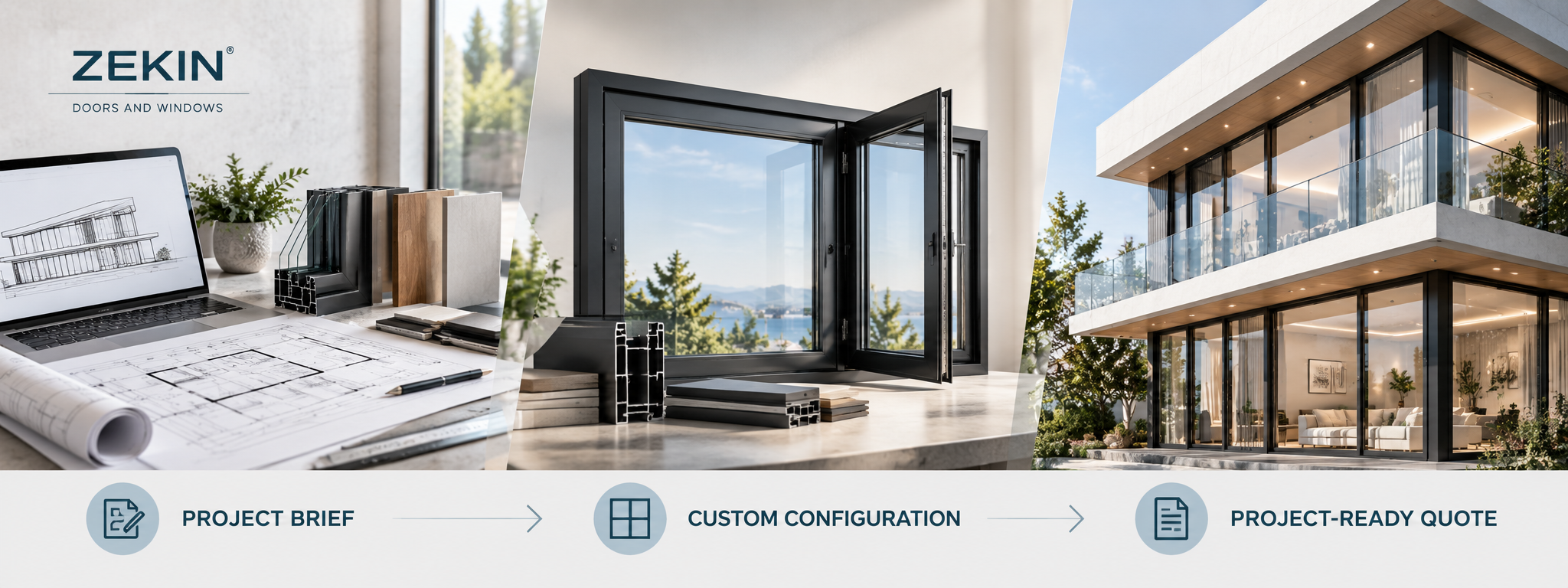
For an upcoming project, contact ZEKIN with your drawings, core specifications, and project location. We can review the proposed openings, recommend suitable aluminum window styles, and prepare a project-specific quotation for your new construction windows.