Vinyl vs Aluminum Windows: Which Is Better for Your Project?
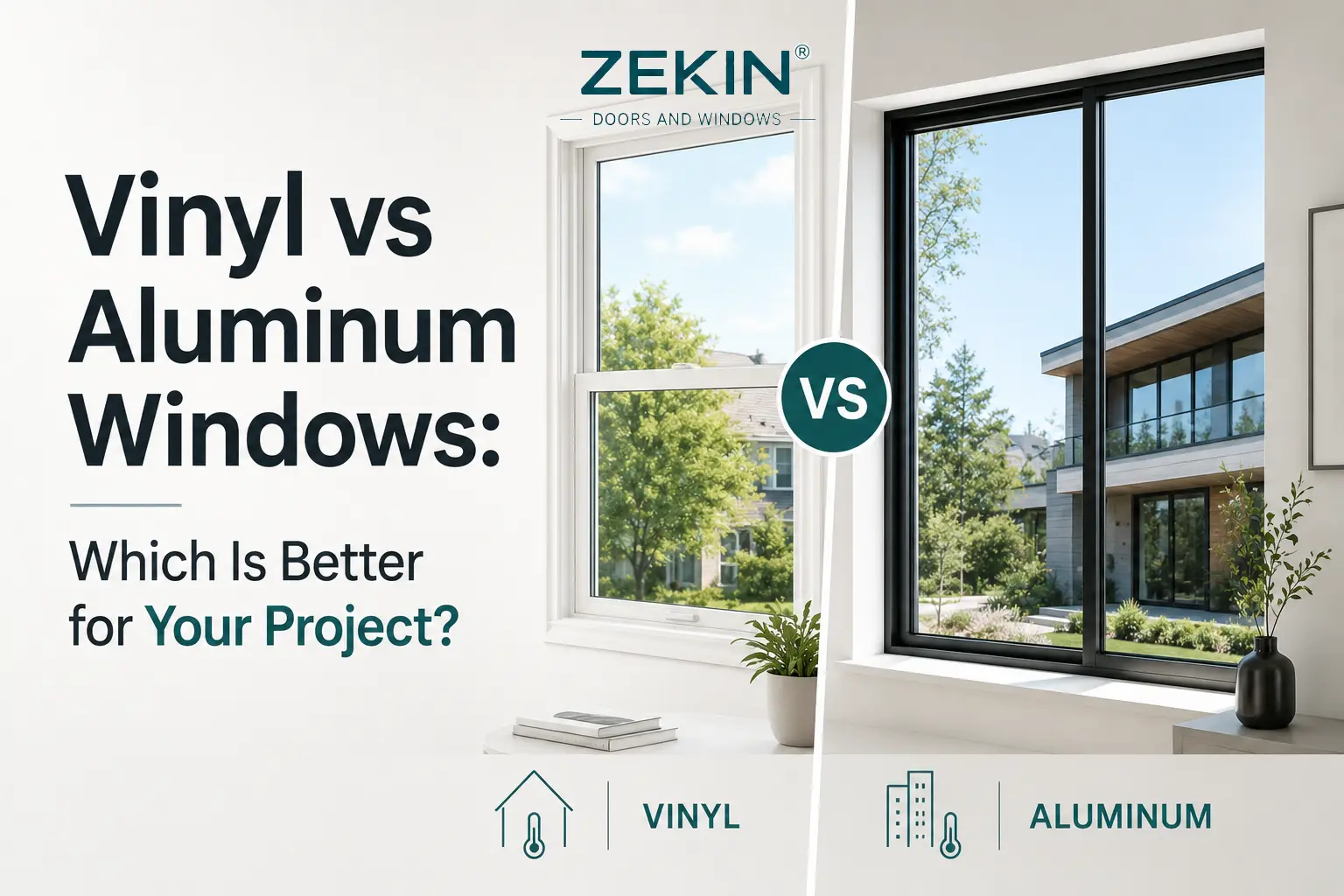
For project buyers, comparing vinyl vs aluminum windows involves more than choosing a frame material. Opening size, appearance, climate, performance, maintenance, and budget all shape the decision. Vinyl suits many standardized residential openings, while aluminum gives builders and developers greater flexibility for larger dimensions, slim sightlines, and customized designs. Evaluating these priorities together makes the right system easier to identify.
Vinyl vs Aluminum Windows: A Quick Snapshot
| Factor | Vinyl Windows | Aluminum Windows |
|---|---|---|
| Thermal performance | Higher inherent frame thermal resistance | Thermal-break designs reduce conductive heat flow while retaining aluminum’s structural and design flexibility |
| Strength | Suited to standard residential openings; larger units may need reinforcement or wider profiles | Can support larger panels, slimmer profiles, and complex assemblies when properly engineered |
| Maintenance | Low routine maintenance and no repainting in most applications | Low routine maintenance with finishes selected for the exposure environment |
| Finishes | Common colors and supplier-specific laminates | Broad powder-coated, anodized, wood-grain, and custom color options |
| Customization | Efficient for standardized dimensions and repeatable configurations | Flexible for nonstandard dimensions, opening methods, finishes, and multi-panel designs |
| Cost | Often economical for standardized residential units | A broad price range that reflects size, glazing, finish, hardware, and customization |
| Applications | Insulation-focused homes and conventional openings | Custom homes, larger openings, multifamily, hospitality, and commercial projects |
Vinyl vs Aluminum Windows: Key Performance Differences
These broad differences come from how each window system is engineered. When comparing vinyl windows vs aluminum windows, project buyers should focus on whether the proposed unit can meet the required dimensions, performance targets, operating needs, and site conditions.
Frame Strength and Profile Design
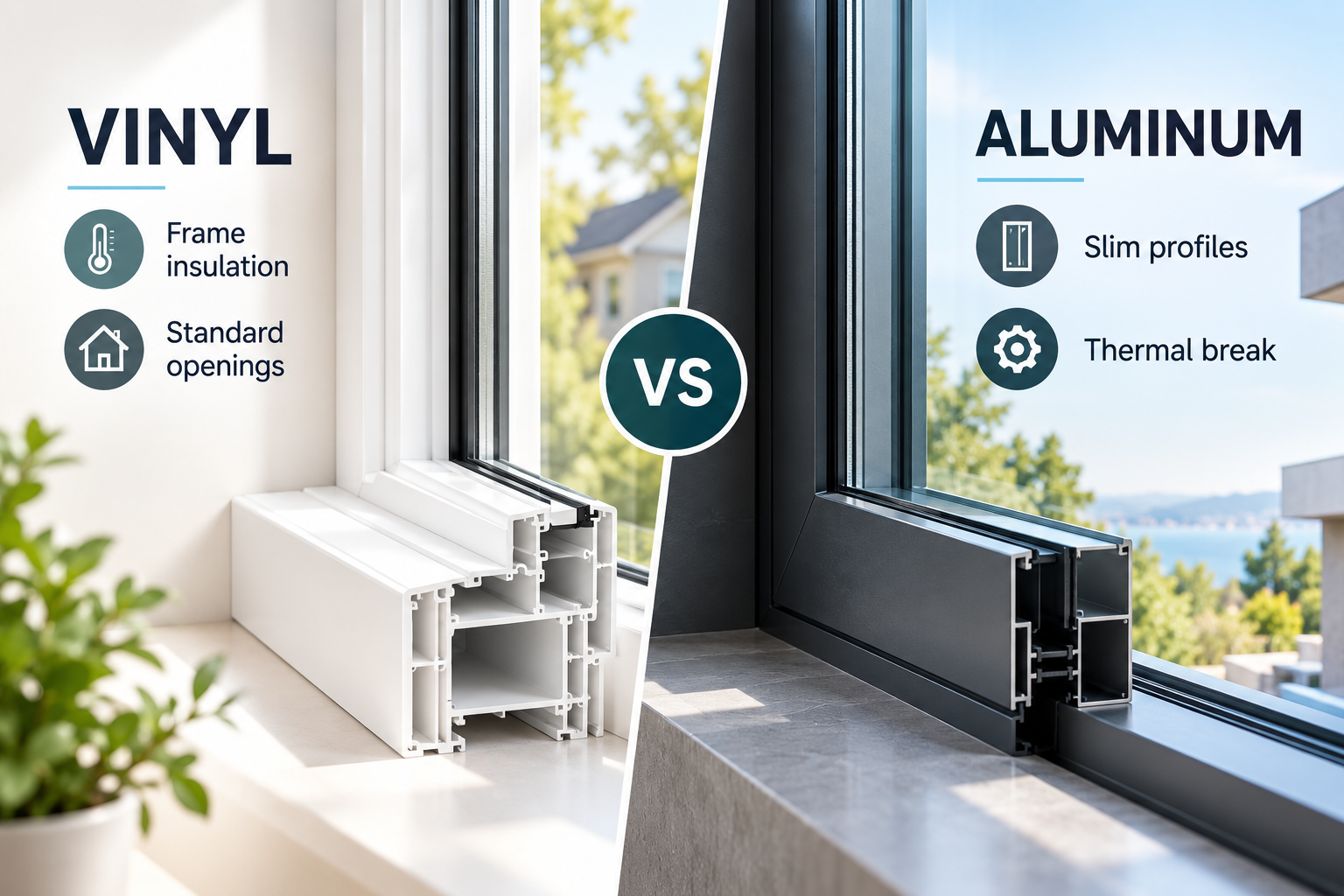
Vinyl frames commonly use multi-chamber profiles and may need reinforcement or wider sections as window dimensions increase. Aluminum’s strength-to-weight ratio can support relatively slim profiles, larger glazed units, and coordinated multi-panel assemblies when the selected system is engineered for the span, glass weight, and wind load.
Thermal Performance and Climate Suitability
Vinyl’s lower conductivity gives the frame higher inherent thermal resistance. Aluminum systems designed for improved thermal performance use a thermal break to reduce conductive heat flow between the interior and exterior frame sections.
Whole-window U-Factor is also influenced by the glazing, gas fill, spacers, and frame design, while SHGC depends mainly on the glazing and Low-E coating. Weather seals and opening style affect air leakage, so the complete window configuration provides a more useful basis for performance comparison than frame material alone.
Climate then determines which performance factors matter most. In colder conditions, a lower U-Factor and effective air sealing help limit heat loss, while interior surface temperatures and indoor humidity influence condensation risk. In hot or sunny locations, SHGC and glazing selection become more important for controlling solar heat gain.
Moisture Resistance and Maintenance
Vinyl resists moisture and usually does not require repainting. Aluminum can also require little routine maintenance when the frame finish is selected for the installation environment.
For both systems, long-term performance depends on keeping drainage paths, weather seals, tracks, screens, and hardware in serviceable condition. Coastal or heavily exposed projects require additional attention to finish durability and corrosion-resistant components.
Styles and Configurations
Both materials are available in common window styles, although the practical range depends on the selected system. Vinyl products often focus on repeatable residential dimensions and configurations. Aluminum offers greater flexibility for nonstandard sizes, coordinated finishes, and multi-panel designs when one project requires several window types. Maximum dimensions, glazing limits, hardware, screens, and opening options remain specific to the selected series.
Once these performance and configuration requirements are clear, buyers can compare what each quotation actually includes.
Vinyl vs Aluminum Windows Cost: What Affects the Price?
The final vinyl vs aluminum windows cost depends on size, glazing, opening style, finish, hardware, performance requirements, freight, and installation. Vinyl often has a lower initial price for repeatable residential units with standard dimensions. Aluminum quotations cover a broader specification range and may include larger panels, thermal breaks, heavier glazing, custom finishes, or coordinated opening types. These differences make the quoted scope as important as the frame material.
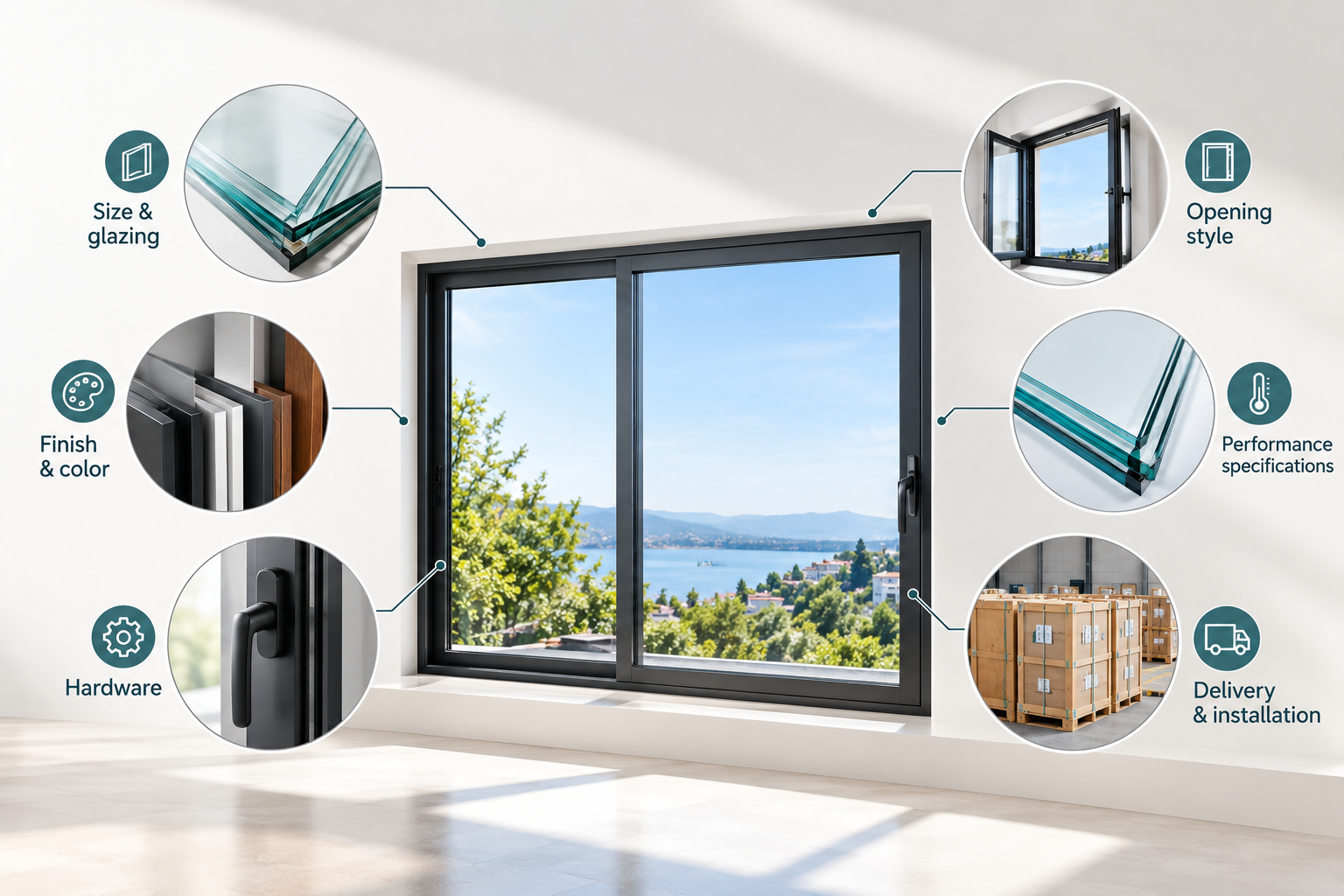
To compare quotations fairly, buyers should check the following items on the same basis:
- Match construction and performance. Use the same dimensions, opening method, glazing, Low-E coating, thermal configuration, and required thermal, structural, air, and water ratings.
- Match finishes and accessories. Confirm that colors, hardware, screens, blinds, reinforcement, and panel arrangements are included in both quotations or listed separately.
- Match the delivered scope. Compare quantities, packaging, freight terms, destination charges, installation responsibilities, sealing, and required market documentation.
Aligning these specifications shows what each price actually includes and whether the quoted system meets the project requirements.
Best Applications for Vinyl and Aluminum Windows
With the performance and quotation scope clarified, buyers can consider where each material is most practical.
Vinyl windows are a practical fit when:
- Openings are mainly standard residential sizes.
- Inherent frame insulation is a leading requirement.
- Colors, profiles, and configurations are standardized.
- The project favors a repeatable residential specification.
Thermally broken aluminum windows are often a stronger fit when:
- Larger openings or heavier glazing require a strong frame.
- Slim sightlines and contemporary elevations are important.
- Custom colors, dimensions, or multi-panel layouts are required.
- Several opening types need a consistent finish across one project.
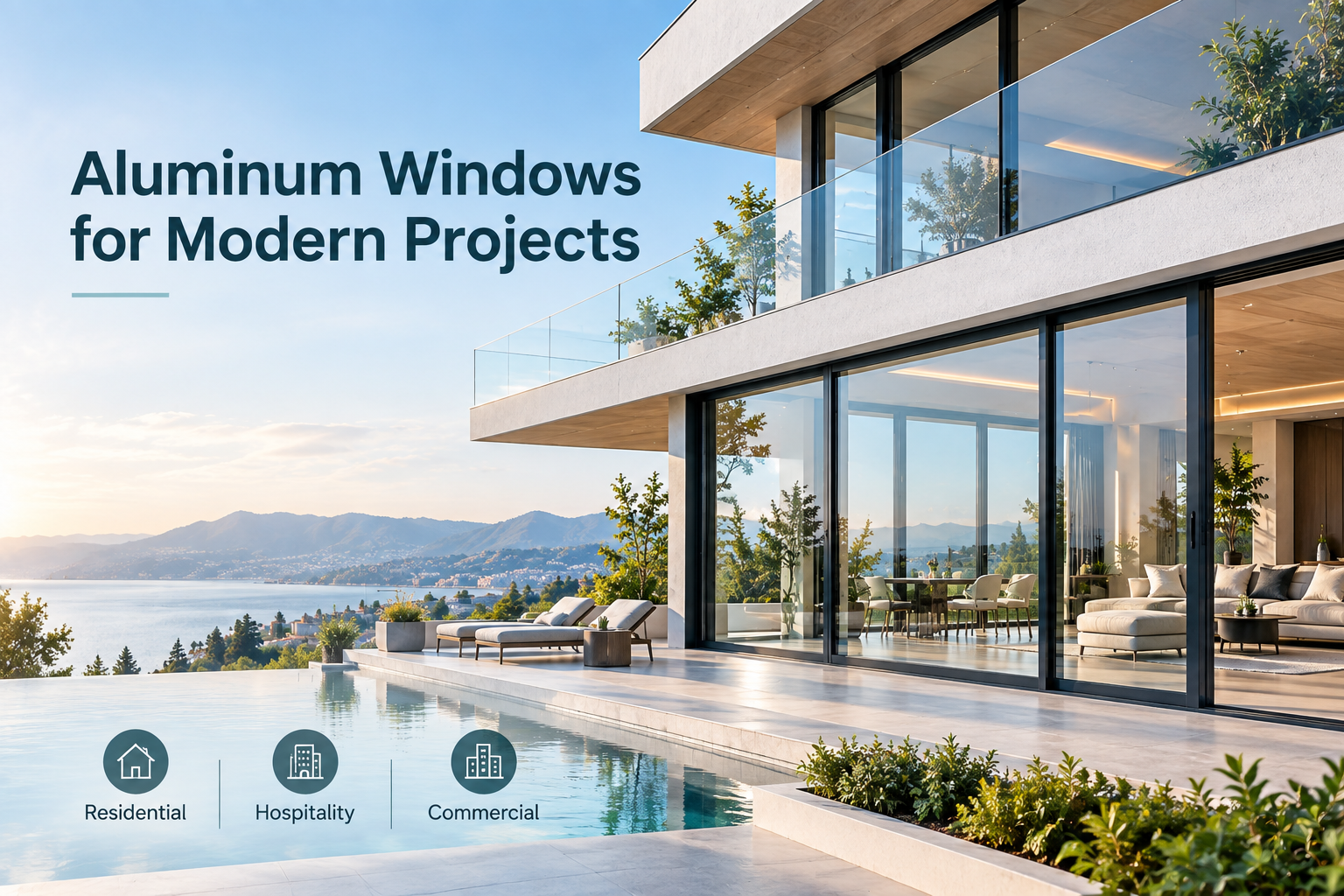
- The application involves custom homes, multifamily buildings, hospitality spaces, or commercial construction.
These patterns provide an initial direction. The final choice should also account for the product’s U-Factor, SHGC, condensation performance, finish, drainage, and sealing in the intended climate and exposure.
When these requirements point toward aluminum, the focus shifts to whether a manufacturer can supply the window schedule as specified.
For new-build applications, see ZEKIN’s guide to new construction windows.
Planning an Aluminum Window Project? Explore ZEKIN’s Custom Options
At ZEKIN, we provide custom aluminum window systems in casement, sliding, fixed, awning, single/double-hung, tilt-and-turn, skylight, and folding styles. Depending on the selected series, glazing, frame finishes, screens, hardware, and opening configurations can be coordinated with the project requirements.
If aluminum fits your window schedule, contact us with your drawings, opening dimensions, quantities, destination, and required performance. We can review the project details and recommend suitable configurations for quotation.