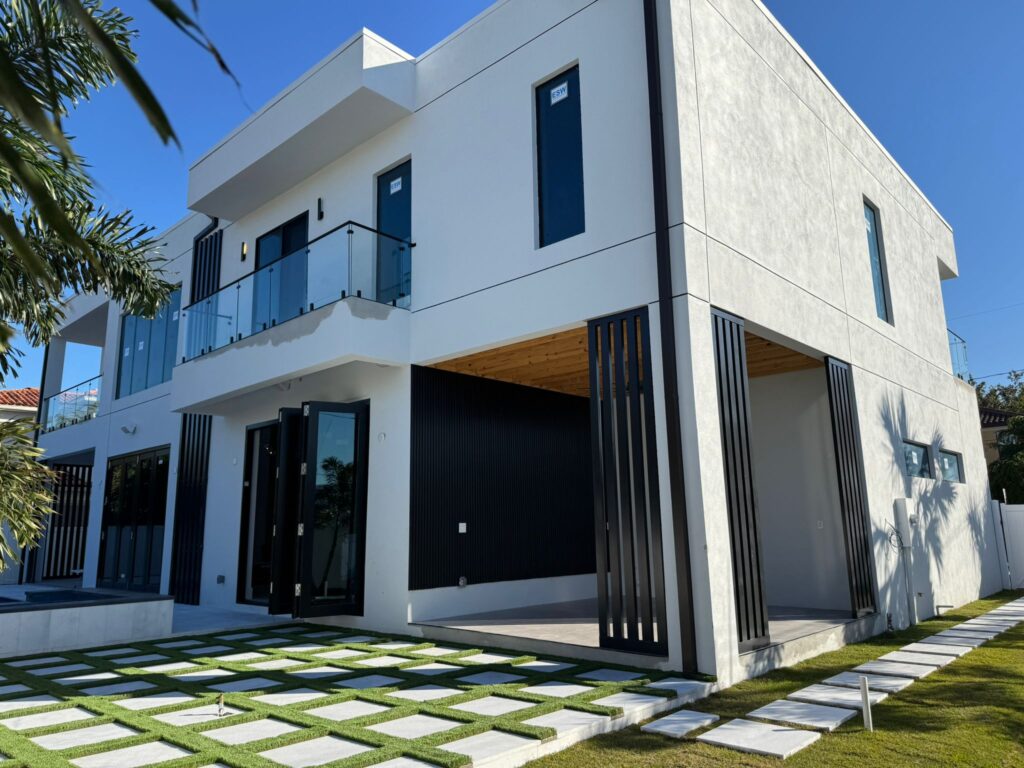
Recently, my client Zack reached out about his new house in South Florida:
“Will standard aluminum windows naturally resist ocean rust?”
Ask most contractors, and they’ll give you a quick, reassuring nod—after all, aluminum doesn’t form flaky red rust.
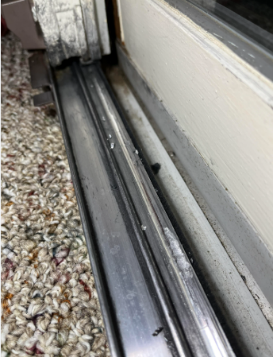
Yet, living within 2 miles of the coast reveals a frustratingly different reality. Walk down any oceanfront street after two or three seasons, and you’ll spot the exact same pattern: peeling paint, chalky white deposits, stuck rollers, and snapped screws.
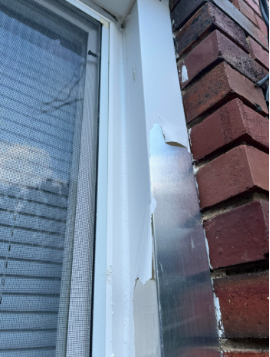
The culprit behind this structural breakdown is simple. While bare aluminum creates its own protective oxide skin, throwing standard fasteners into the mix transforms the entire frame into a miniature electro-chemical battery—one that slowly eats the metal away under the salty coastal breeze.
1.The Anatomy of Failure: How Coastal Air Destroys Frames
- Pitting Corrosion
Microscopic chloride ions in seawater continuously bombard aluminum’s passive film, puncturing invisible, deep craters that compromise the frame’s underlying structural strength.
- Galvanic Corrosion
When two dissimilar metals—like an aluminum frame and a steel screw—touch in high-humidity salt air, an electrical circuit closes. Acting as a sacrificial anode, the aluminum surrenders electrons and dissolves into a crumbly white powder, leaving screws frozen solid.
- Sand Abrasion & Volumetric Swelling
Winds sweep coarse beach sand into lower sliding tracks, acting like high-grit sandpaper with every movement. Once bare aluminum is exposed, its corrosion byproducts expand in volume—physically jamming the roller carriages inside the track.
2.The Six Engineering Standards
- PVDF Liquid Coatings: Fluoropolymer finishesblock chloride penetration, easily enduring over 2,000 hours of grueling salt spray tests without blistering.
- Grade 316 Fasteners with PTFE Isolation: Molybdenum-enriched 316 steel resists pitting, while non-conductive PTFE washers placed between steel and aluminum physically sever the galvanic circuit.
- Sealed Polymer-Enclosed Bearings: Precision stainless bearings—completely encased in self-lubricating polymer wheels—lock out sand grit and corrosive oxide dust.
- Heavy-Duty Profile Wall Thickness: Upgrading profile walls to heavy-duty engineering standards (e.g., 1.8mm–2.0mm+ structural profiles) prevents expansive sliding panels from flexing under severe wind loads.
- Pressure-Equalized Hidden Drainage: Concealed drainage paths equalize internal air pressure, naturally driving rainwater out through gravity while blocking wind-driven saltwater backflow.
- Structural Silicone Edge Seals: Replacing standard edge seals with structural silicone prevents degradation from intense marine UV, eliminating fogging between double-pane units.
3.Engineering in Action: A 260m² Villa in Coral Gables, Florida
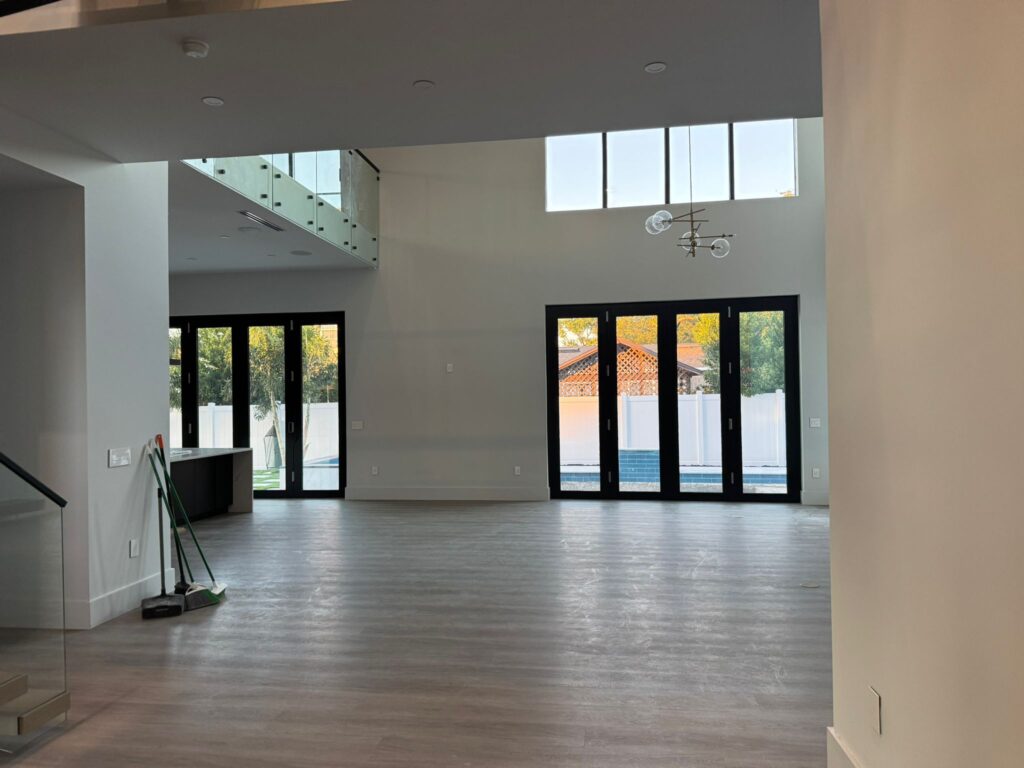
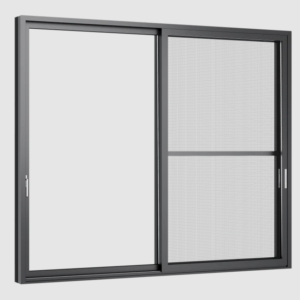
Silky Sliding Near the Pool Deck: Facing the outdoor pool, where abrasive sand and salty moisture are constantly blown inland, our ZEKIN 90 Series Sliding Doors—engineered with 1.8mm profile wall thickness, PVDF finishes, 5mm+15A+5mm clear tempered glass, and polymer-encased stainless bearings—glide effortlessly and silently with just one finger, completely unbothered by track sand.
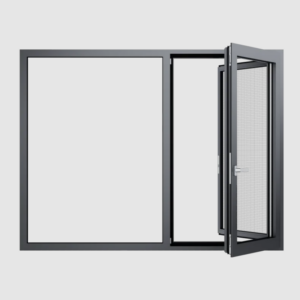
Rust-Free Wall Openings for Coastal Living: To create a seamless indoor-outdoor transition for the main living area, our ZEKIN 88 Series Thermal Break Bi-Fold Doors utilize 2.0mm heavy-duty profile walls and Grade 316 stainless steel hinges paired with PTFE synthetic isolation shims. The homeowner can fully retreat whole wall sections to embrace the ocean breeze without ever worrying about hinge corrosion or seizing up.
Zero Leakage in Tropical Storms: During local extreme pressure-water trials, ZEKIN’s hidden pressure-equalized drainage architecture efficiently discharged heavy precipitation using gravity while completely blocking wind-driven saltwater backflow.
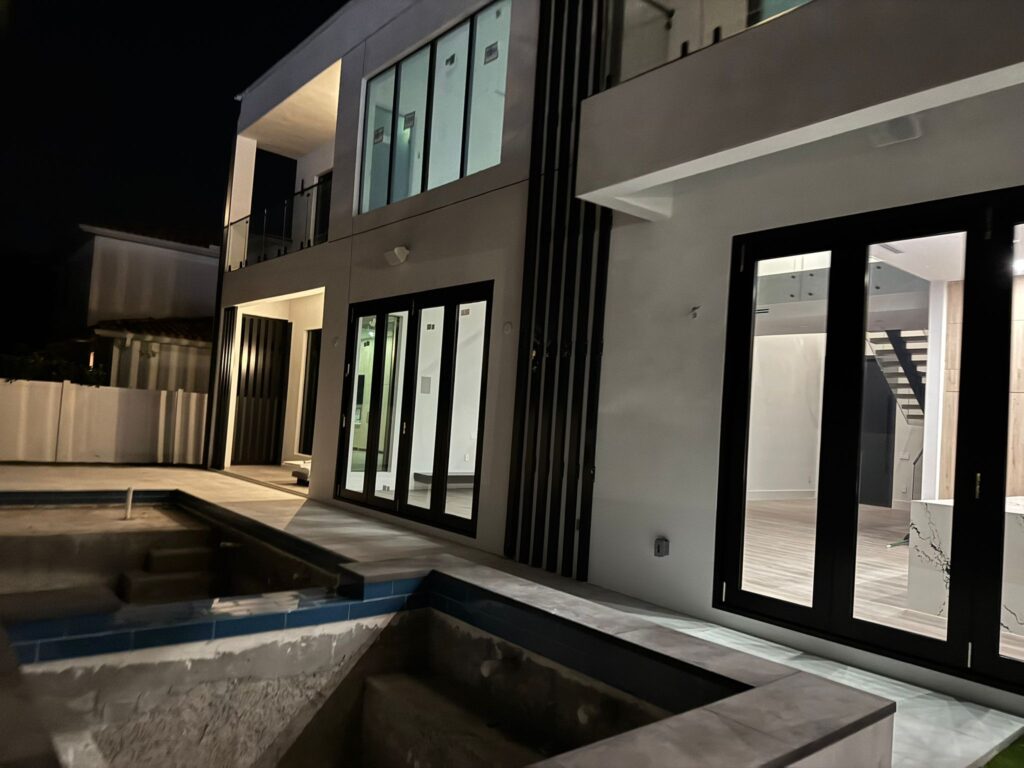
Coastal window failures rarely stem from choosing aluminum itself; they happen when interior-grade doors—unprepared for galvanic reactions, pitting, and sand wear—are placed next to the sea.
When building near the water, ensure your specifications explicitly call for PVDF finishes, Grade 316 hardware with physical isolation gaskets, sealed bearings, and hidden pressure-equalized drainage.