Aluminum vs Fiberglass Casement Windows: Where Each Material Actually Wins
Neither aluminum nor fiberglass wins across the board. Each material takes the crown in different situations. You will see six criteria here: thermal performance, durability, maintenance, design, cost, and application fit. The final verdict is scenario-based. It helps you match window materials to your climate, budget, and style.
You may compare aluminum vs fiberglass casement windows for a custom aluminum casement window project. You may also weigh fiberglass and aluminum windows against vinyl, aluminum and fiberglass options from other aluminium casement window manufacturers. ZEKIN supplies both materials. This comparison has no favorite. You get a fair look at cost, durability, aesthetics and energy efficiency before you choose.
Key Takeaways
- Fiberglass windows insulate better and resist temperature changes, making them ideal for extreme climates.
- Aluminum windows cost less upfront and offer slim, modern frames for large glass areas.
- Fiberglass requires less maintenance and lasts longer, providing good long-term value.
- Aluminum needs thermal breaks in most homes to prevent heat loss and condensation.
- Choose based on your climate, budget, and design goals—neither material wins everywhere.
Thermal Performance: Where Fiberglass Wins
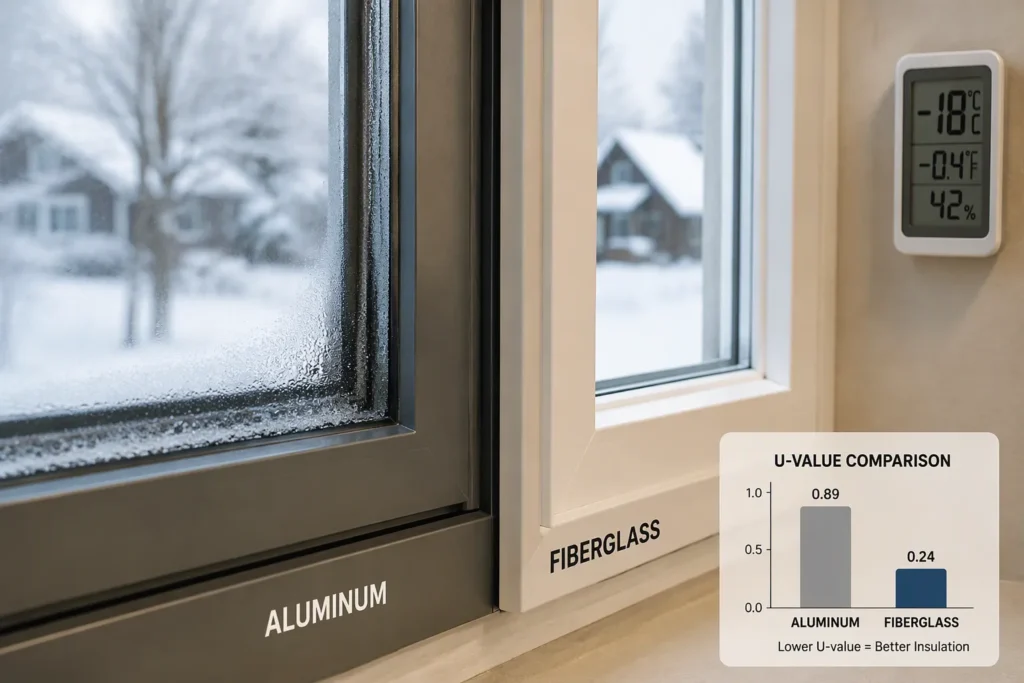
Heat moves through a window frame in one of two ways. It conducts straight through the material, or it escapes around the glass edge. Material choice decides how much heat travels that path. This is the first place where the two casement options separate. You cannot judge a frame by its label alone, either; the profile design matters as much as the alloy.
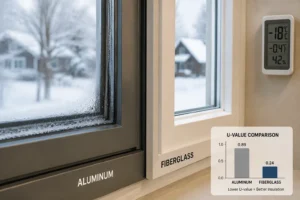
Aluminum has high thermal conductivity. Heat passes through it quickly, so a plain aluminum frame insulates less effectively than wood or composite frames. Cold weather makes that gap visible. The frame surface drops, moisture in the room condenses on it, and you get fogging or water beads. That high thermal conductivity drives the condensation problem. A thermal break, an insulating barrier set inside the profile, interrupts the path and solves most of it.
Fiberglass in Extreme Temperature Swings
Fiberglass wins this category in climates with extreme temperature swings. Low thermal conductivity keeps the frame surface closer to room temperature on both hot and cold days. The gap widens as the temperature difference across the wall grows. In a cold-climate home, that difference shows up as drier interior air and less ice at the sill. In a hot climate, the frame stays cooler to the touch and puts less load on the air conditioner.
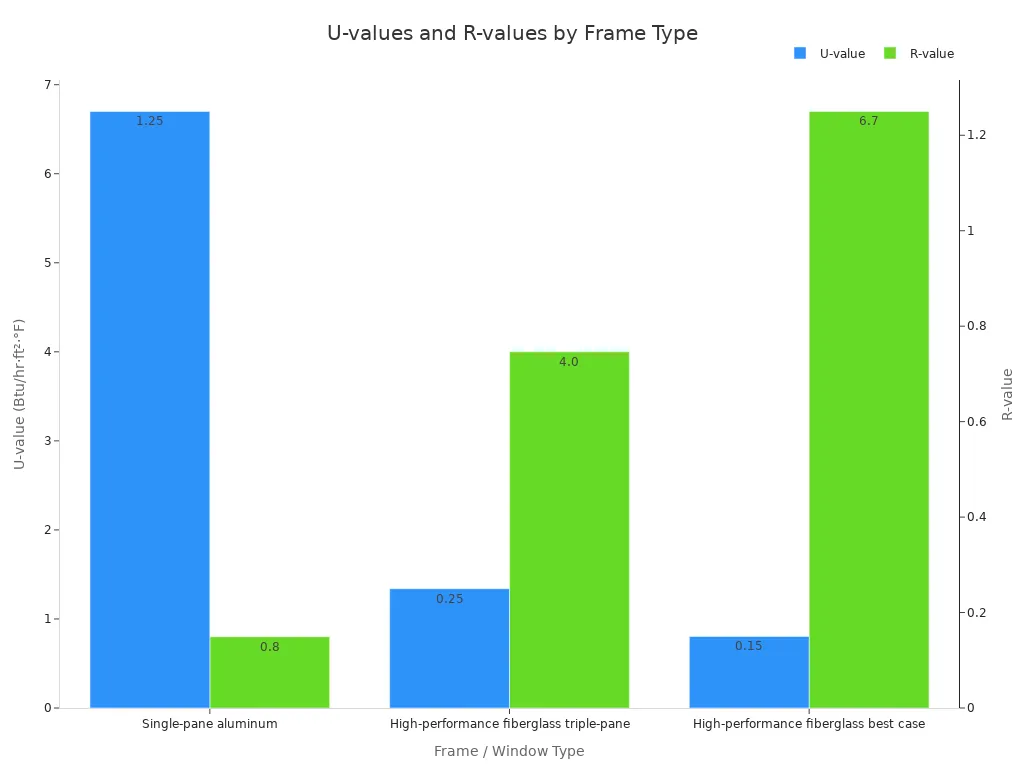
U-value measures insulation, and lower is better. A single-pane window with a basic aluminum frame typically sits around 1.25. High-performance fiberglass windows in triple-pane systems can reach 0.25 or lower, and the best cited cases drop to 0.15, an R-value near 6.7. On a double-pane window, a fiberglass frame may halve the overall U-value. Published U-factors usually run from a high of 1.3 for a typical aluminum frame single-glazed unit to a low of around 0.2 for a multi-paned, high-performance window with low-emissivity coatings and insulated frames.
Stability matters too. The metal expands roughly 23 × 10⁻⁶/K, about 2.5 times the rate of glass at 9 × 10⁻⁶/K. Fiberglass moves at 5–10 × 10⁻⁶/K along the profile, so it tracks the glass more closely. Fiberglass windows hold that advantage over decades of seasonal movement. Fewer stress cycles at the seals mean fewer air leaks, and seal compression stays more even, so gaskets keep their grip.
Aluminum With Thermal Breaks in Mild Climates
The thermal-break version is a legitimate performer, not a loser. Thermal break technology cuts conduction through the frame, and solar-control glazing handles heat coming through the glass. In mild climates, that pairing delivers solid thermal performance at a lower price. Where heating and cooling loads stay modest, the extra insulation may not justify the added investment. Plain aluminum without a break still suits warehouses, interior partitions and cost-sensitive projects in mild zones.
Treat the window as a complete system. Frame, glass, coatings and spacers work together. Many aluminum windows with thermal breaks meet the same energy efficiency targets as a wood-framed unit in a mild zone. Judge energy-efficient window frame materials by the whole assembly, not the frame alone.
Durability and Strength of Fiberglass Windows
Strength means little without stability. A frame must hold its shape through heat, cold, and moisture. Both materials handle that job, yet they do it in different ways. The sections below show where each one earns its keep.
Fiberglass: Dimensional Stability
Fiberglass generally wins on dimensional stability. Its frames expand and contract at rates very similar to glass, so the assembly moves as one unit across wide temperature ranges. That shared movement keeps seals tight between the frame and the glazing. Air infiltration and moisture penetration stay low as a result. Fiberglass also resists warping, swelling, and moisture-related deterioration, and it holds structural integrity in extreme conditions.
A DOE-hosted technical report supports this point. It notes that fiberglass has a low coefficient of thermal expansion, which preserves seal integrity and reduces warping or leakage when large indoor and outdoor temperature differences occur. That stability limits cyclic stress at glazing seals, corner joints, and hardware interfaces. Aluminum expands at a different rate than glass, so engineers must accommodate its thermal movement carefully to avoid gaps or seal stress. Aluminum framed windows can still perform well, but the design demands more attention to movement.
Aluminum: Strength and Large Panes
Aluminum brings rigidity to the table. Its stiffness lets it support large glass panes without bending, which suits casement windows with big glass areas. You get wide, unobstructed views without a bulky frame. That same rigidity helps aluminum windows hold their shape under wind load on tall or exposed elevations.
Lifespan tells a similar story of trade-offs. Fiberglass windows typically last 30 to 50 years even with minimal maintenance. Aluminum windows typically last 20 to 30 years with proper maintenance, and corrosion usually drives the failures. Both figures assume reasonable care, and both materials deliver solid durability for the money.
| Window Type | Typical Lifespan |
|---|---|
| Fiberglass | 30 to 50 years (even with minimal maintenance) |
| Aluminum | 20 to 30 years (with proper maintenance; failures usually due to corrosion) |
Maintenance: Aluminum Windows vs Fiberglass
Upkeep decides how much a window costs you after installation. Both materials ask little of you compared with wood windows. The difference lies in what each one needs and how often.
Fiberglass: Low-Maintenance Pick
Fiberglass wins the low-maintenance race. Its dimensional stability keeps the sash aligned, so locks and operators need fewer adjustments over many winters. Weather seals face less stress, and that reduces the frequency of repairs. The material resists rot and corrosion outright, which removes a whole category of upkeep.
You can paint fiberglass windows to change color or restore appearance. Paintable does not mean painting is required, though. Most owners never refinish the frame. Cleaning and occasional hardware checks cover the routine work. That light workload suits homeowners who want a window they can largely ignore.
Aluminum: Finish Care Needed
Aluminum windows stay relatively low-maintenance too. The metal resists corrosion, and it will not swell or warp when moisture hits. Long-term performance depends on alloy quality, profile thickness, surface finishing, drainage design, hardware quality, and sealing details. Specify corrosion-resistant hardware for coastal, humid, or high-UV sites.
The finish deserves periodic attention. Protect the powder coat or anodizing, and repair any coating damage before it exposes bare metal. A simple schedule keeps aluminum frames in shape:
| Task | Frequency |
|---|---|
| Clean the frames | At least once a month, more often with heavy use or harsh weather |
| Lubricate hinges and locks with silicone-based lubricant | Every 6–12 months |
| Inspect weather seals and gaskets | At least annually, more often in coastal or dusty areas |
| Check tracks and weep holes | Every few months |
Compare fiberglass vs. vinyl vs. aluminum and you will find all three beat wood on upkeep. Fiberglass and aluminum windows both reward proper installation with years of trouble-free service.
Design: Aluminum vs. Fiberglass Windows
Design preference decides this category, not material superiority. Aluminum vs. fiberglass windows split the design vote along style lines. One material favors sharp, contemporary lines. The other favors color flexibility.
Aluminum: Slim, Modern Profiles
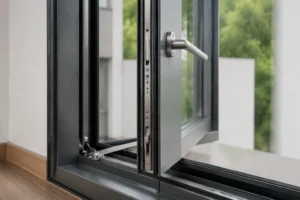
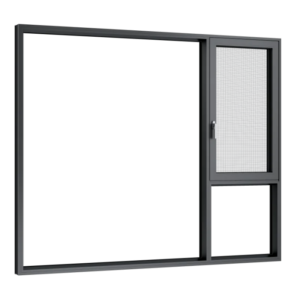
Aluminum’s rigidity lets manufacturers shape thin, precise profiles. You get narrow sightlines and more glass per opening. That sharp, premium look appeals to many homeowners planning modern designs. A custom aluminum casement window can match tight architectural specs without a bulky frame eating into the view.
The material also holds crisp edges and tight tolerances through production. Aluminum frames suit floor-to-ceiling glazing, corner windows, and minimalist facades. Many aluminium casement window manufacturers offer powder-coated finishes in a wide color range, so the frame can read as a deliberate design element. The result feels engineered rather than traditional.
Fiberglass: Paintable Frames
Fiberglass window frames accept paint, which opens up color matching. You can tune the frame to your home’s exterior trim, siding, or door color. That flexibility helps fiberglass frame windows blend into traditional, craftsman, or cottage styles where a painted frame belongs.
The finish also refreshes over time. A faded or chipped fiberglass frame takes a new coat without replacement. Homeowners who repaint the house every few years can carry the same color onto the windows. Fiberglass frames also mimic the look of wood more closely than metal does, which suits period homes.
Neither material wins on design outright. Your facade style, color plan, and sightline goals decide the better fit.
Cost and Value: Aluminum vs. Fiberglass Windows
Price tags tell only half the story. A window carries two costs: the money you spend on day one and the money you spend across its service life. Aluminum and fiberglass split those two bills in opposite ways.
Aluminum: Lower Upfront Cost
Aluminum is an inexpensive building material. That low material cost gives aluminum windows a clear upfront price advantage. Budget-conscious builds feel that difference immediately, especially on projects with many openings. A custom aluminum casement window often lands well below a comparable fiberglass unit at the quote stage.
The lower price does not mean a stripped-down product. You still get corrosion resistance, rigidity, and slim profiles. You can also direct the savings toward glazing upgrades, which lifts energy efficiency without pushing the total budget. Weigh that trade-off against long-term cost considerations before you commit.
Fiberglass: Long-Term Value
Fiberglass carries a higher upfront cost. The material and the pultrusion process both add expense at purchase. That premium buys real performance: stronger thermal insulation, better dimensional stability, and a longer service life. The earlier sections of this guide put fiberglass lifespan well beyond aluminum’s.
Spread that price across decades of service, and the gap narrows. Fewer seal failures mean fewer repairs. Stable frames mean less air leakage, which supports cost and energy efficiency over the full life of the window. Homeowners who plan to stay put often find the math favors fiberglass.
ZEKIN supplies both materials, so you can weigh upfront budget against lifecycle value without switching suppliers. Ask for quotes on both, then compare total cost of ownership rather than sticker price alone.
Application Fit: Aluminum vs Fiberglass Casement Windows
The right pick depends on your project, not on a universal ranking. Use the scenarios below to match material to job.
Fiberglass Casement Windows: Best Fits
Fiberglass wins in harsh climates with extreme temperature swings. Its low thermal conductivity keeps frames closer to room temperature, and its movement tracks glass closely, so seals stay tight through hard seasonal cycling. Choose fiberglass windows when low maintenance tops your list. The frames resist rot, corrosion, and warping, and most owners never refinish them. Choose fiberglass for long-horizon value too. A longer service life spreads the higher purchase price across more years, and stable frames protect energy efficiency over that span.
Aluminum Casement Windows: Best Fits
Aluminum wins on modern, design-focused projects. A custom aluminum casement window delivers slim sightlines and sharp lines that suit contemporary facades. Aluminum also wins where large glass areas matter. Its rigidity carries big panes without bending. Budget-conscious builds favor aluminum windows for their lower upfront cost. Mild climates with thermal breaks round out the list, because a thermal break plus solar-control glazing meets efficiency targets without the fiberglass premium.
The Desert-Climate Nuance
Desert conditions test both materials in specific ways. Review the main stressors:
| Desert Climate Factor | Specific Challenge for Aluminum Casement Windows |
|---|---|
| Ambient temperatures above 110°F | Extreme solar heat gain stresses frames and seals |
| Direct solar irradiance exceeding 1,000 W/m² | Intense UV degradation of gaskets and finishes |
| Overnight temperature drops of 40°F or more | Wide diurnal thermal cycling stresses seals and frames |
| Conventional double-pane assemblies | Single-point locks and single EPDM seals are not engineered for this environment |
In desert climates, heat performance, warping resistance, maintenance, frame width, lifespan, and cost all factor in. Solar Heat Gain Coefficient matters more than U-factor here; aim for SHGC of 0.25 or lower to block radiant heat. Fiberglass resists thermal bridging and holds up under sustained heat above 110°F, which makes it the more weather-appropriate choice in regions like the Mojave and Southern Nevada. Low-E3 fiberglass units cost more upfront, around $1,200 per unit versus $600–$800 for standard vinyl, yet reduced cooling bills offset that gap. Aluminum still appeals for its thinnest possible frame and sleek look, and some homeowners in hot areas like Phoenix choose it for aesthetics alone. Pair it with low-emissivity glass to reflect solar heat while admitting daylight, and clean hinge tracks and gaskets often to clear sand and dust.
ZEKIN supplies both options. The right pick depends on your climate, budget, and design goals.
No single material wins every matchup. Your climate, budget, design goals, and maintenance preferences decide the outcome. Weigh durability, energy performance, style, and upfront cost against your own priorities.
Fiberglass takes the strongest case in harsh climates, low-maintenance homes, and long-horizon value. Aluminum wins on modern looks, large panes, and budget-friendly builds with thermal breaks. The aluminum vs fiberglass casement windows debate ends with your project, not a universal ranking. Compare aluminum vs. fiberglass windows on the criteria above, then choose with confidence. ZEKIN supplies both options, so either path stays open.
FAQ
Which material lasts longer, fiberglass or aluminum?
Fiberglass windows typically last 30 to 50 years with minimal maintenance. Aluminum windows typically last 20 to 30 years with proper care, and corrosion usually drives failures. Fiberglass holds its shape longer, so it wins on service life.
Do aluminum windows need thermal breaks?
Yes, for most homes. Plain aluminum conducts heat quickly and invites condensation on cold days. A thermal break interrupts that path and solves most of the problem. In mild climates, a thermal break plus solar-control glazing meets efficiency targets at a lower price than fiberglass.
Which frame suits large glass panes better?
Aluminum wins here. Its rigidity supports big panes without bending, so you get wide views and slim sightlines. Fiberglass tracks glass movement more closely, which protects seals, yet aluminum carries the heavier glass loads in large casement openings.
Is fiberglass worth the higher upfront price?
Often, yes. The premium buys stronger insulation, better dimensional stability, and a longer lifespan. Spread that price across decades, and the gap narrows. Homeowners who plan to stay put usually find the math favors fiberglass.
How do these two compare with vinyl?
All three beat wood on upkeep. Fiberglass vs. vinyl vs. aluminum comes down to climate and budget. Fiberglass leads on stability and lifespan, aluminum on slim profiles and upfront cost, and vinyl on entry price. Weigh replacement windows against your goals, and treat home window replacement as a long-term decision rather than a one-time purchase.