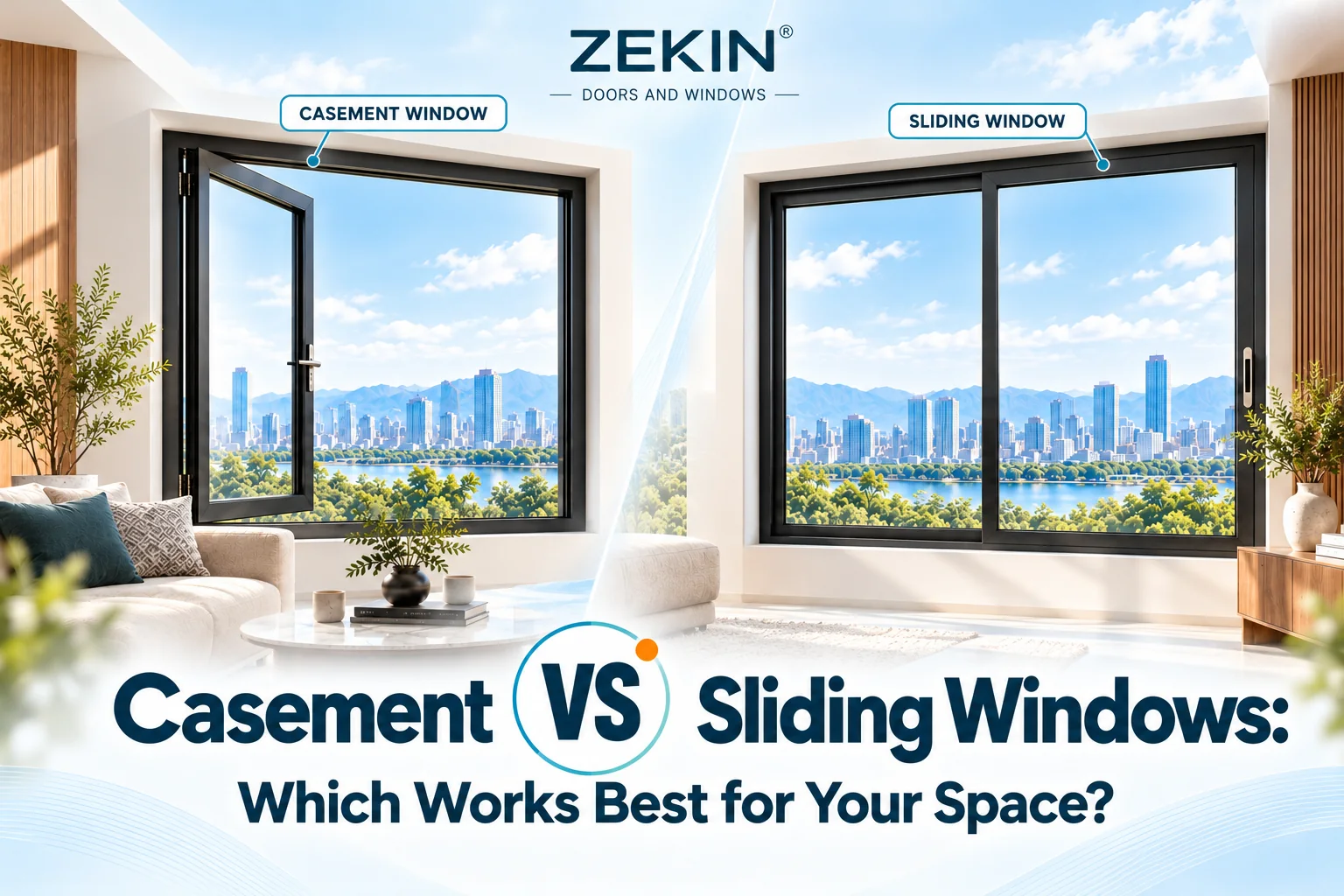
Casement vs Sliding Windows: Which Works Best for Your Space?
Casement windows suit openings where a larger ventilation opening is a priority and there is room for the sash to swing. Sliding windows work well where furniture or exterior walkways restrict that movement. For builders, developers and window distributors comparing casement vs sliding windows, this article examines aluminum windows for apartments, homes and offices. It explains how opening layouts, energy ratings, cleaning access and specifications affect product selection and project quotations.
Casement vs Sliding Windows at a Glance
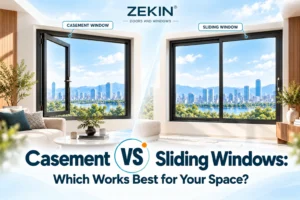
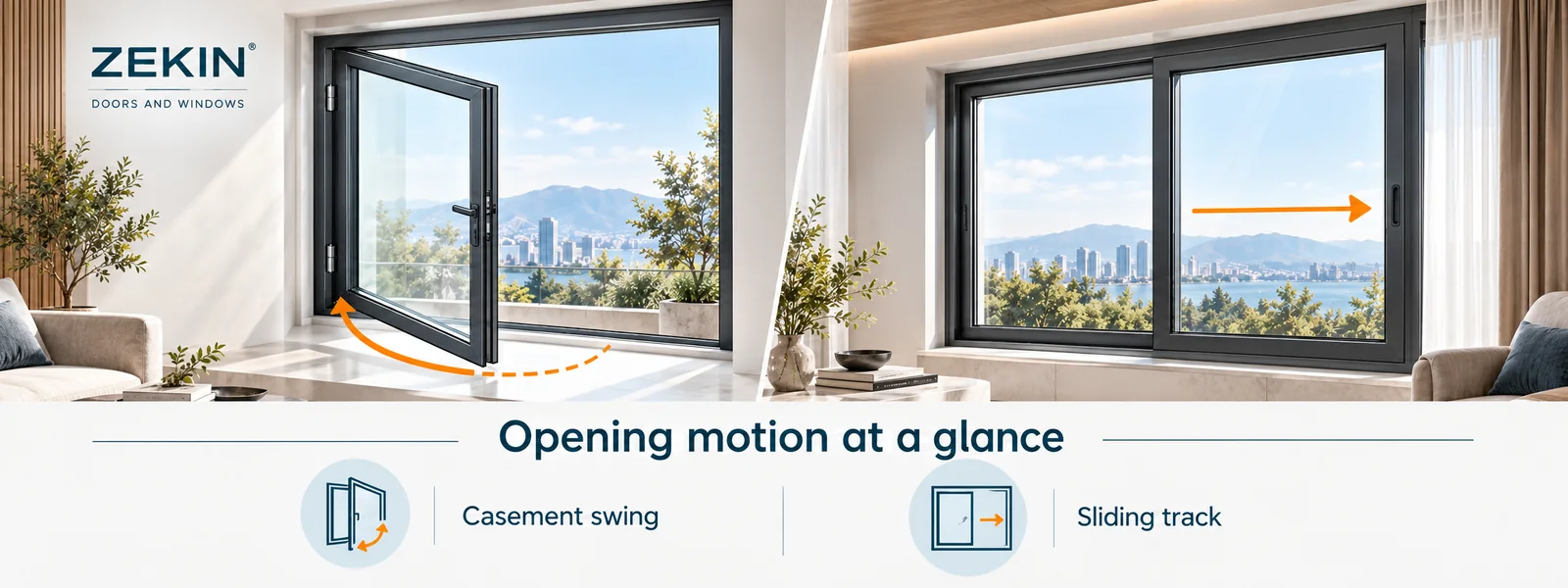
Casement windows have side-hinged sashes that swing inward or outward. Sliding windows move horizontally along tracks, keeping the sash within the window frame.[1]
Casement vs Sliding Windows: Which Window Style Fits Your Space?
The better fit depends on the usable ventilation opening and the space available for sash movement. Casement and sliding windows offer different ways to balance those needs:
Aluminum Casement Windows for Larger Ventilation Openings
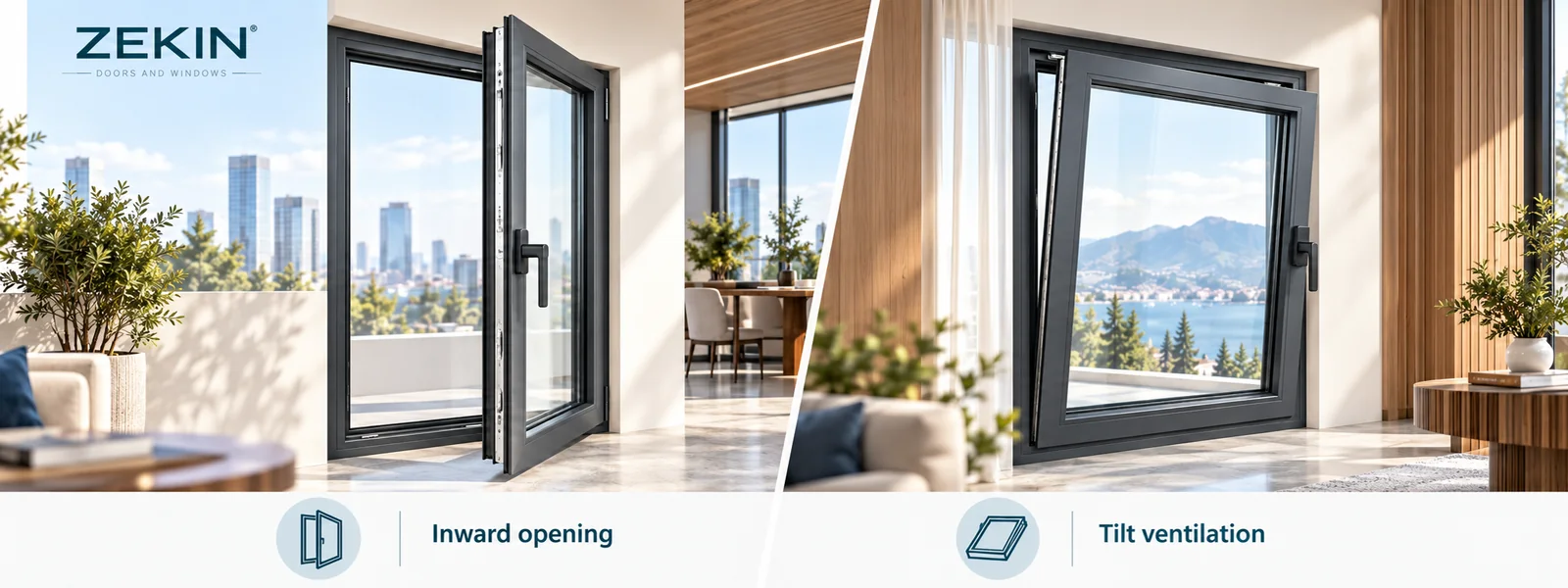
Aluminum casement windows can expose more of a comparable opening when fully open than a conventional two-panel slider. The sash swings away from the frame instead of overlapping another panel, making this style useful where a generous ventilation opening is a priority. The opening direction determines where swing clearance is needed:
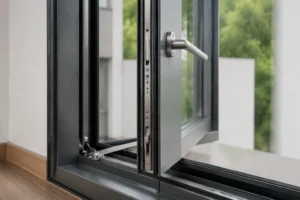
Inside clearance. An inward-opening casement window such as ZEKIN’s needs room for its full inward swing. A nearby desk, cabinet or curtain can limit that movement. For gentle ventilation, tilt-and-turn configurations allow the top of the sash to tilt inward, requiring less clearance than a full inward swing.

ZEKIN inward-opening casement and tilt-and-turn aluminum window configurations Outside clearance. An outward-opening casement needs unobstructed exterior space. Its swing should clear nearby walls, fittings and pedestrian routes.
Aluminum Sliding Windows for Limited Swing Space
Aluminum sliding windows keep their sashes within the frame’s plane while open. That behavior is useful in two common situations:
Restricted space on either side. A slider avoids an inward sash beside apartment furniture and an outward sash over an exterior walkway.
Wide horizontal openings. In a conventional two-panel slider, one sash moves across the other, leaving part of the frame closed even at full travel. Panel count and track arrangement determine how much of a wider opening is available for ventilation.
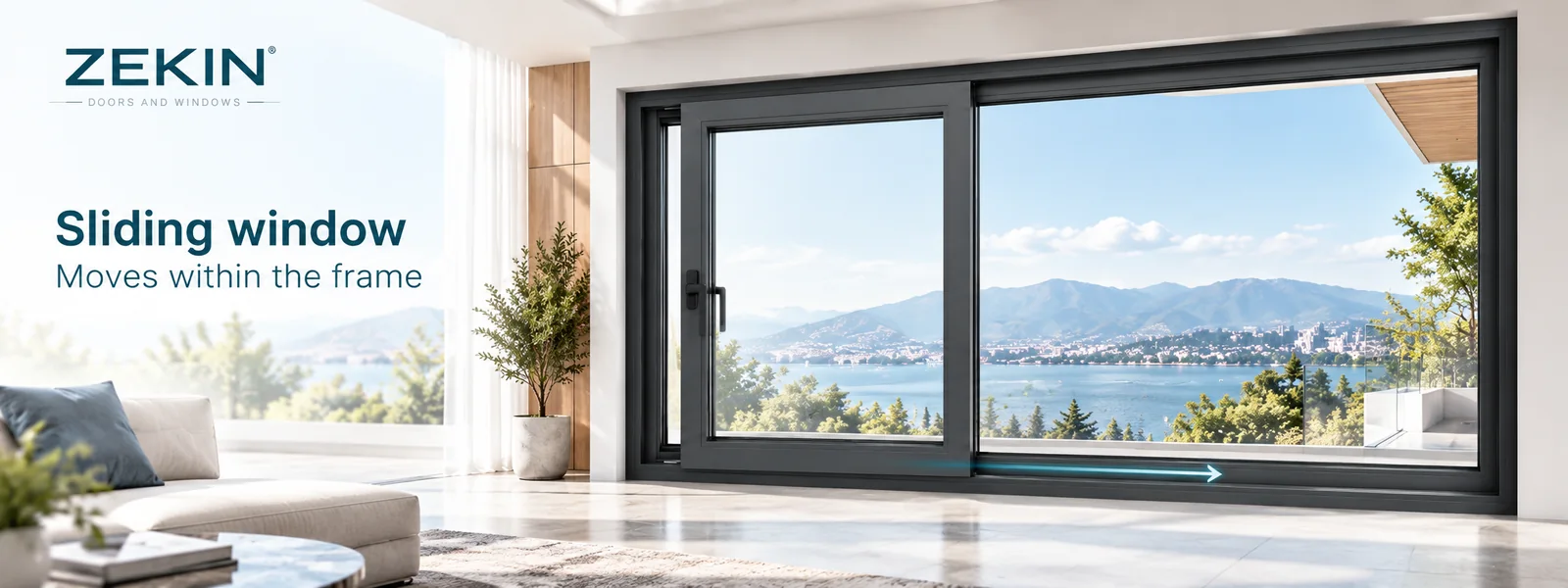
Combining the two styles can accommodate different room layouts while coordinated frame finishes keep the building’s exterior visually consistent.
Are Casement Windows More Energy Efficient?
Casement windows generally have an advantage in limiting air leakage when they close against a compression gasket. Conventional sliding seals must allow the sash to travel along the frame and typically allow more leakage.[2] That difference is useful where reducing drafts is a priority.
The complete window’s ratings put that sealing advantage alongside insulation and solar heat control:[3]
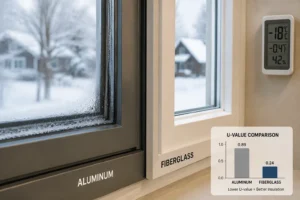
U-factor. A lower whole-window U-factor means less heat transfer through the assembly. It reflects the combined insulation performance of the frame and glazing.
SHGC. This measures solar heat entering through the window. A lower value helps limit solar heat gain in warm climates and sunny exposures. The appropriate value also reflects the project’s heating and cooling needs.
Air leakage. Lower tested leakage indicates a tighter assembly under the stated test conditions. It addresses drafts, a different issue from heat passing through the frame and glass.

In ZEKIN’s range, double-glazed sliding windows pair two panes of tempered glass with thermal-break frames, while casement options include double or triple glazing. For project buyers, the relevant comparison is how the complete configurations perform against the building’s energy targets.
For a closer look at frame materials, our vinyl vs aluminum windows guide compares their strength, thermal design and maintenance needs.
Casement vs Sliding Windows: Cleaning and Cost Differences
Cleaning effort depends on access to the glass and moving parts. Price differences reflect the configuration and supply scope included in each quotation.
Cleaning Access Follows the Opening Design
Casement windows. An inward-opening sash can bring exterior glass within easier reach from indoors. Outward-opening models require a different access plan, especially above ground level.
Sliding windows. Tracks and drainage openings need regular cleaning to remain free of debris.[4] Exterior glass access depends on the selected design, including whether a sash can be removed for cleaning.
Sliding window track cleaning and ZEKIN window screen options
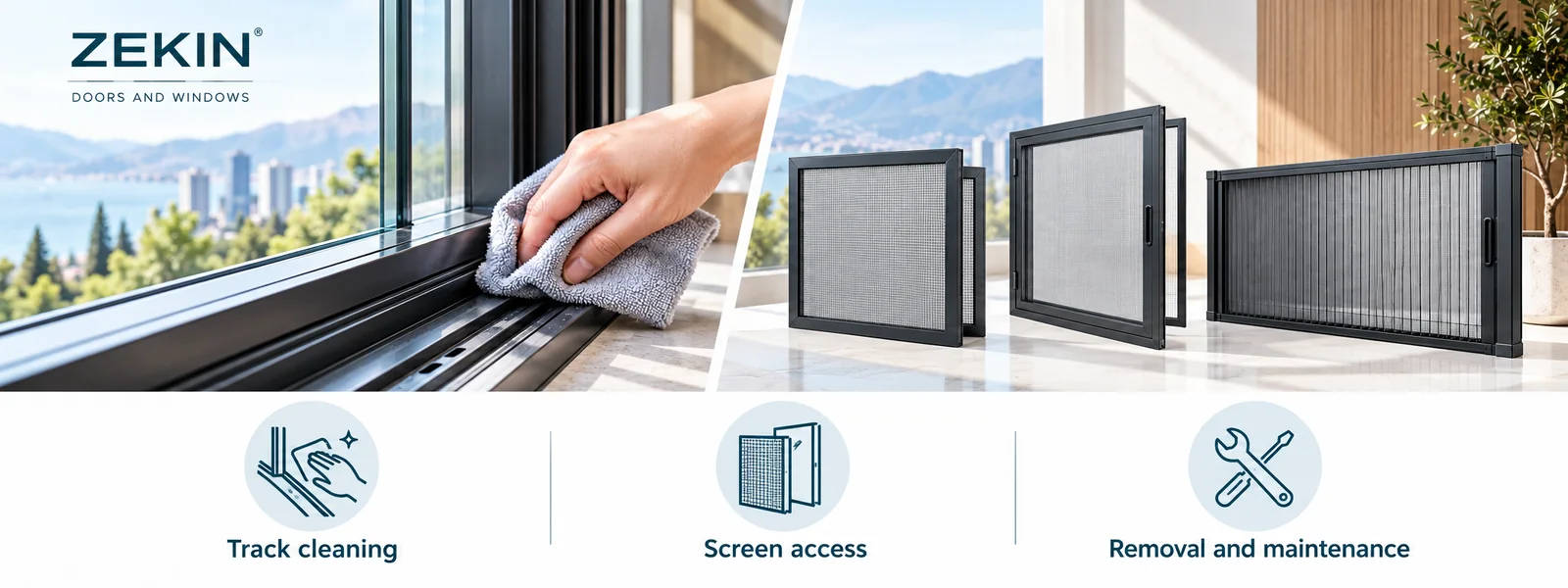
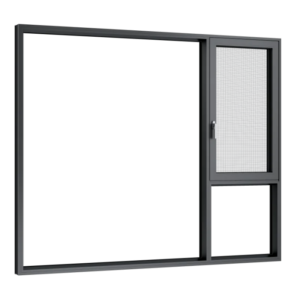
ZEKIN offers both styles with optional screens. For sliding windows with screens, everyday convenience also depends on screen travel, handle access and removal for cleaning.
Window Size and Configuration Affect the Price
The price difference becomes meaningful when the two quotations cover equivalent dimensions and specifications. Larger sashes or heavier glazing can require different hardware, while extra moving panels add operating components to a sliding layout. Three parts of the quotation explain those differences:
Dimensions and layout. For custom window sizes, equivalent overall dimensions provide the starting point. The quotation also needs to distinguish fixed glazing from moving sashes, which involve different operating components.
Glazing and hardware. Equivalent glass, finishes, screen options and hardware quality make the specifications comparable. Casement hinges and locking systems differ from the tracks and rollers that support sliding operation.
Supply scope. Packing, freight and installation belong in the supply-scope comparison because their inclusion changes what the quoted total covers.

Commercial window quotation checklist for dimensions glazing, hardware and supply scope
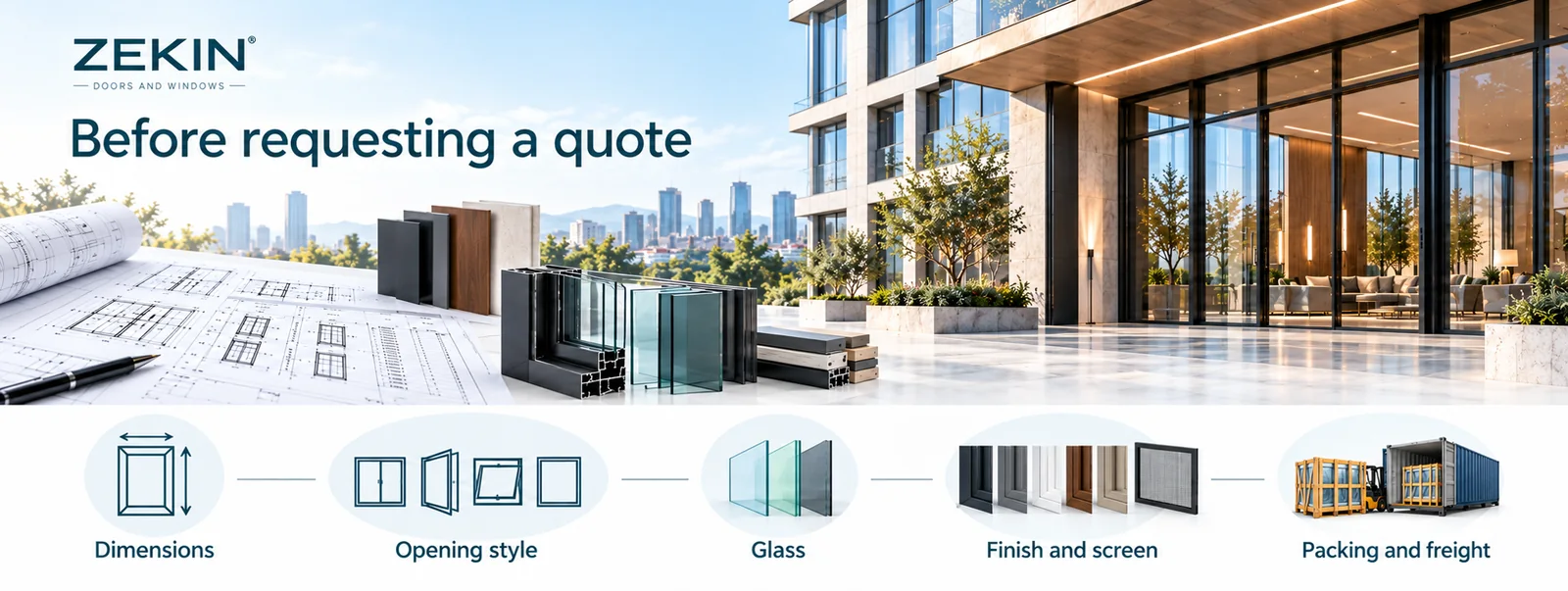
For projects still defining the opening, our new construction window guide explains how to align dimensions with installation details. An agreed specification makes quotations comparable and gives the manufacturer a clear production reference.
Plan Your Aluminum Windows with ZEKIN
Bring the whole window schedule together with ZEKIN. As an aluminum door and window manufacturer, we supply both aluminum casement windows and aluminum sliding windows with project-specific dimensions and coordinated finishes. A repeated apartment layout or office elevation can use both styles while following one agreed design brief.

We help keep the order consistent from drawings to production:
Drawing review. We check opening dimensions, operating styles, glazing and screen needs against project drawings, so choices for different rooms follow the same approved specification.
Direct factory communication. Our team carries approved details through fabrication, glazing, quality checks and export packing, giving buyers a direct contact for configuration questions.
If you are comparing casement vs sliding windows for an upcoming project, contact ZEKIN with opening dimensions, room constraints and glazing requirements. We’ll review suitable configurations and prepare a quotation for your window schedule.
References
[1] National Fenestration Rating Council. Window Types.
[2] Oak Ridge National Laboratory. Retrofit Best Practices Guide. January 6, 2004, p. 5.
[3] National Fenestration Rating Council. Window Ratings.
[4] Fenestration and Glazing Industry Alliance. Caring for Your Windows, Doors & Skylights.