What Are Aluminum Casement Windows and How Do They Work? A Component-Level Guide
Aluminum casement windows feature a sash hinged on one vertical side. The panel swings outward like a door. A hand crank, handle, or lever drives the motion. The design suits demanding applications.
This guide takes a casement window apart, piece by piece. Frame, glass, hardware, and weatherstripping each play a part. Together they open, close, seal, and ventilate a room. Casement windows differ from other aluminium windows in how those parts cooperate, and that casement design rewards close study. Anyone who specifies or maintains a modern aluminum casement window benefits from knowing the chain. The result is a clear picture of the whole assembly.
Key Takeaways
- Aluminum casement windows have a sash hinged on one side that swings outward like a door.
- The frame, sash, glass, hardware, and weatherstripping work together to open, close, and seal the window.
- Aluminum frames are strong, durable, and resist corrosion, making them ideal for demanding applications.
- A compression seal and thermal break keep air and heat out, improving energy efficiency.
- Proper installation and regular maintenance ensure smooth operation and a long service life.
Aluminum Casement Windows: The Basics
What Are Casement Windows?
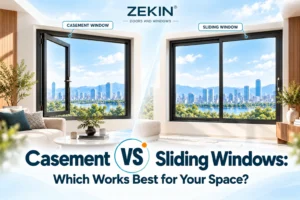
A casement window carries a sash hinged on one vertical side. The panel swings outward like a door. Depending on the system, the sash opens up to 90 degrees. This outward swing defines what are casement windows, and it separates them from sliding and fixed styles.
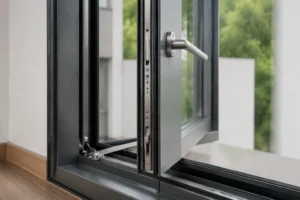
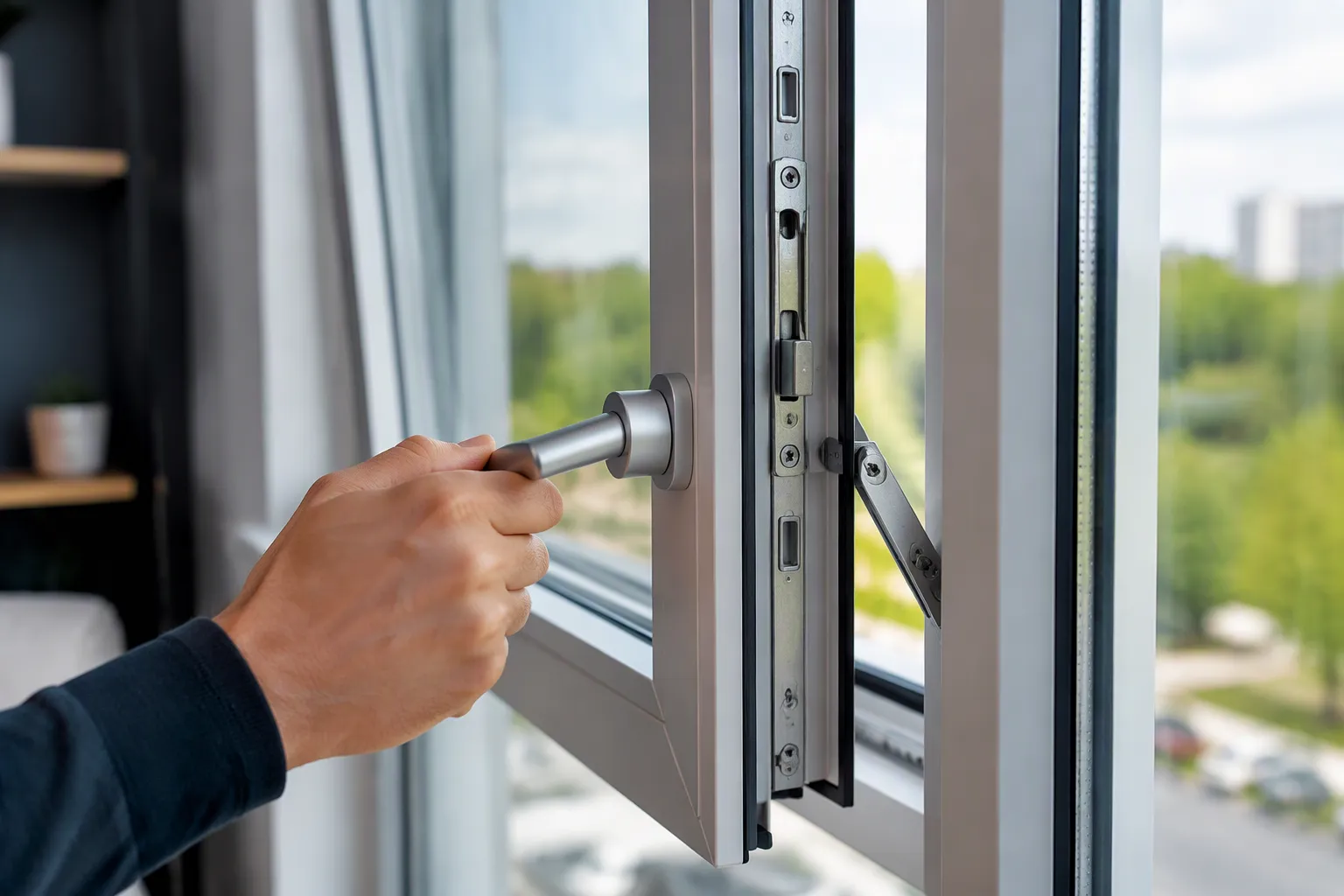
Operation comes in three common forms. A hand crank turns a rotary handle that drives hidden internal gears, and the sash glides outward with high mechanical leverage. A push-out handle uses friction hinges and casement stays instead. A single lever engages multiple locking points and pulls the sash tight against the seals. The crank handle connects to a moving arm inside the frame, so the user can stop the window at any position and admit just the right amount of air. Crank operation stays easy even when the window sits out of reach.
Why Choose Aluminum Frames?
Aluminum brings strength and durability to window construction. Its natural oxide layer resists corrosion, and powder-coated or anodized finishes suit coastal areas. Upkeep typically means rinsing and light cleaning. Aluminum frames reach a 40–60-year service life with minimal maintenance, and they often last up to 50 years when cared for properly. These traits make aluminum a strong match for commercial buildings and demanding applications.
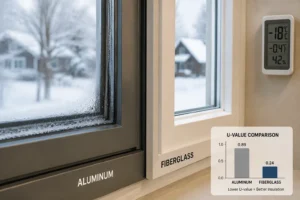
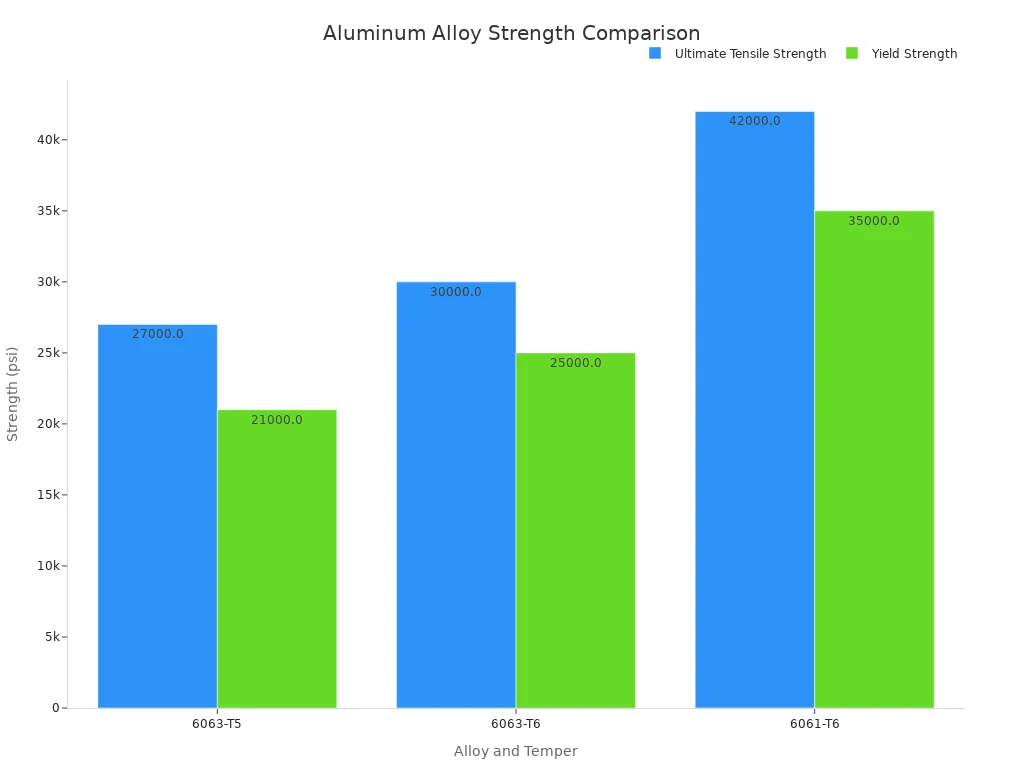
Alloy choice matters for a modern aluminum casement window. The 6063-T5 grade offers 27,000 psi ultimate tensile strength, while 6061-T6 reaches 42,000+ psi for heavy-duty commercial work. A thermal break structure separates the inner and outer frame faces, and thermal break technology limits heat transfer through the profile. A custom aluminum casement window can combine these options with specific glazing and hardware. ZEKIN’s aluminum casement window range shows how these elements come together.
Key Components and Their Roles
Frame, Sash, and Glass
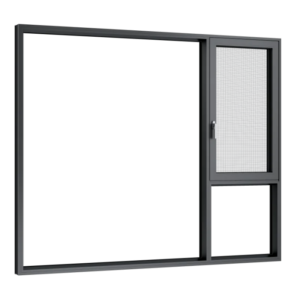
The frame is the fixed outer structure. It anchors into the wall opening and carries every other part. Aluminum profile thickness for casement windows typically spans from 1.4 mm to 3.0 mm. The exact value follows window size, opening configuration, and required performance. A thermal break structure splits the profile into inner and outer faces. This barrier limits heat transfer through the metal. Two common configurations show how the parts scale with performance goals.
| Configuration | Frame/System Depth | Thermal Break | Aluminum Profile Thickness | Max IGU |
|---|---|---|---|---|
| Standard thermal break casement | 67 mm | 24 mm | 1.8 mm | 39 mm |
| High-insulation casement | 78.3 mm | 35.3 mm | — | 47 mm |
The sash is the moving panel that holds the glass. Its window sash structure combines a welded or mechanically joined aluminum perimeter with glazing beads. Those beads press the glass unit into place. Glazing choice drives much of the performance. A single pane suits mild climates, and double or triple units raise insulation. A custom aluminum casement window can pair a specific profile depth with the glazing and hardware a project needs.
Hardware and Weatherstripping
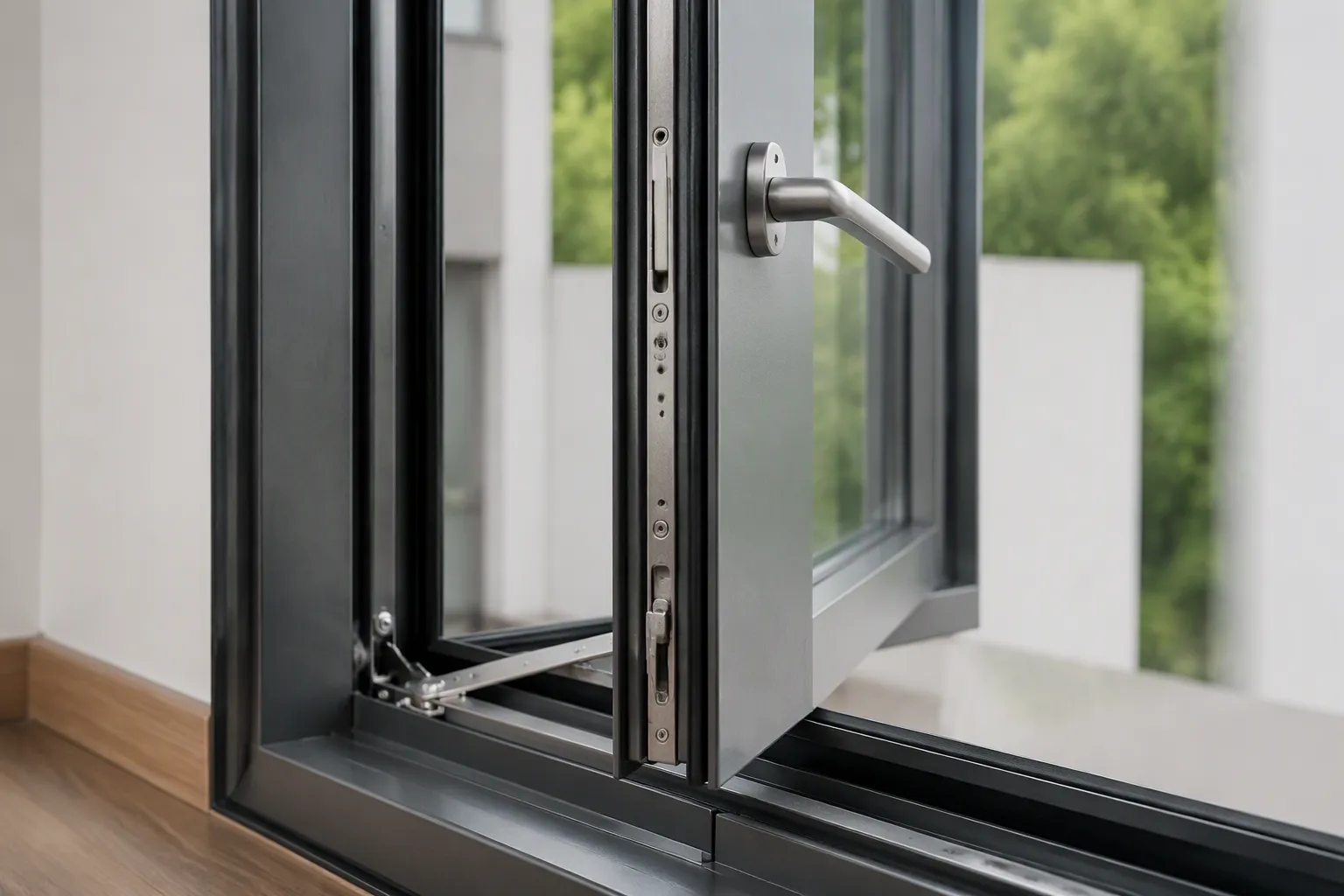
Hardware covers every moving and locking part. The main pieces are crank, hinges, and locks, plus handles and restrictors. Each one has a distinct job and a specification worth checking.
| Component | Function | What to check |
|---|---|---|
| Hinges or friction stays | Carry the sash weight and guide the swing | Load rating, material, arm length |
| Operator (crank) | Converts handle rotation into sash movement | Face-mounted or concealed, operating effort, profile |
| Handle | Gives the user control of the operator | Finish, ergonomics, clearance to screens and sills |
| Lock (single or multipoint) | Draws the sash into the weatherstripping and secures it | Number of lock points, keeper alignment |
Hinge selection follows sash weight. Standard friction stays are typically rated around 25 kg (55 lbs). Oversized or triple-glazed sashes can wear them out early. Heavy-duty casement hinges can carry sash weights up to 200 lbs (90 kg). A buyer should obtain the finished sash weight from the manufacturer, not from glass area alone, and then select hardware rated above that weight with a margin.
Multi-point locking hardware raises security in a measurable way:
- The system anchors the sash to the frame at three to five independent locking points, all driven by one interior handle.
- Distributed engagement stops crowbars and prying tools, and the embedded parts stay tamper-proof from outside.
- Structural aluminum profiles and safety glazing absorb heavy blunt force and keep the barrier intact under repeated strikes.
Weatherstripping is the compressible gasket around the frame and sash. It closes the gap that remains after the lock pulls the panel home. EPDM and silicone are common materials, and both resist compression set over years of use. A worn gasket shows up as drafts, water stains, or whistle at the edges. Replacement is inexpensive and restores the seal.
How Casement Windows Operate
Opening, Closing, and Sealing
Frame, sash, and hardware work as one coordinated set. The sash hangs on hinges along one vertical side. A single crank handle drives the outward swing. Several details keep that motion smooth:
- The sash pivots outward on its hinges, and the open panel acts as an airflow scoop.
- Multi-point, hook-style locks engage the frame at several points on closing.
- Adjustable hinges and quality hardware control the open sash in gusty, exposed locations.
- A compression seal pulls the sash tight against the frame once the handle locks.
Tolerance matters here. A roughly 1/16″ bow in the sash or frame can cause binding during operation. Proper sizing and quality hardware therefore decide whether a casement windows open and close smoothly for years. Buyers of a custom aluminum casement window should confirm squareness at delivery.
Sealing follows a simple chain. The crank turns, the locks draw the panel inward, and the gasket compresses. That compression seal minimizes air leakage under wind load. Most American manufacturers’ casement and awning units earn third-party ratings near 0.01 cfm/ft². One casement tested to ASTM E283 at 25 mph recorded 0.02 cfm/ft². Hung and sliding styles rely on friction-type gaskets and typically rate higher, near 0.30 in some comparisons. A thermal break in the profile adds another layer by limiting heat transfer through the metal.
Ventilation and Airflow Control
An open casement moves plenty of air. The full panel swings clear, and the sash edge channels breeze into the room. Control is coarser, though. The window is essentially either open or closed, with little middle ground. A crank mechanism lets the user stop partway, yet the opening stays a single gap along one edge.
Aluminium windows of the louvre type behave differently. Each slat opens independently across almost the full frame, so airflow adjusts finely across nearly the whole window. Casement windows trade that granularity for a tighter seal and stronger ventilation per opening. Neither style is better in absolute terms. Louvre units fit spaces needing gentle, distributed airflow. Casement units fit rooms that want a firm, directed draft and a secure closed state. Specifiers comparing aluminium windows should match the style to the room’s daily use. A modern aluminum casement window suits bedrooms and offices where full flush ventilation and a compression seal both count.
Comparison and Casement Window Installation
Performance vs. Other Window Types
Wind load separates these products measurably. Aluminum casement windows reach PG50 design pressure under ASTM E330, and higher-end units span PG50–PG70. Vinyl casement windows rate PG30–PG40 on the same standard.
| Window Type | Design Pressure | Standard |
|---|---|---|
| Aluminum casement | PG50 (PG50–PG70 high-end) | ASTM E330 |
| Vinyl casement | PG30–PG40 | ASTM E330 |
Aluminum brings roughly three times the strength-to-weight ratio of vinyl and a 40+ year service life. Vinyl casement windows cost 20–30% less per unit and offer marginally better frame-only U-Factor. Each option fits its own ground. Vinyl suits budget-sensitive low-rise work. Aluminum suits buildings over three stories, sites within 5 km of salt water, and specs calling for PG50+ design pressure. A thermal break structure and thermal break profiles let aluminium windows hold that structural edge without losing insulation. Buyers comparing casement windows cost against casement windows cost across a portfolio should weigh total service life, not sticker price alone. Among aluminium windows, the casement design pairs that strength with a compression seal.
Casement Window Installation Fit
Casement window installation rewards careful measurement. Frame squareness depends on diagonal checks: the two diagonal measurements must differ by less than 1/4 inch. Cedar shims behind every anchor point preserve squareness and prevent frame bowing during fastening. Anchors sit at maximum 24-inch spacing and go in sequentially, with strings run diagonally across opposite corners to verify alignment continuously. Hinges need correct leveling and shimming so weight distributes evenly and the sash avoids long-term stress.
A custom aluminum casement window arrives square only if the opening is square first. Casement window installation also demands hardware alignment checks at each stage, and glazing goes in after the frame is true. ZEKIN supplies components and complete units for these projects. Modern aluminum casement window designs reward this care with decades of smooth operation.
An aluminum casement window is a sash hinged on one vertical side that swings outward. The parts form a chain. Frame and sash hold the glass, hardware drives the swing motion, and weatherstripping completes the seal. A thermal break in the profile limits heat transfer through the metal.
Component knowledge pays off in practice. Readers can evaluate a casement window, plan casement windows maintenance tips, and specify a custom aluminum casement window with confidence. Simple casement windows maintenance tips include checking gaskets and hinge tension each season. ZEKIN’s lineup offers a practical starting point for anyone comparing aluminium windows. Each casement style rewards an informed buyer.
FAQ
What defines casement windows?
Casement windows carry a sash hinged on one vertical side. The panel swings outward like a door. A crank, handle, or lever drives the motion. This outward swing separates casement windows from sliding and fixed styles. Buyers see the difference clearly once they watch a casement windows demo.
How do casement windows seal against weather?
The lock draws the panel inward. The gasket compresses against the frame. That compression seal limits air leakage under wind load. A thermal break in the profile adds another barrier. Well-built casement windows therefore hold a tight closed state, and aluminium windows of this type suit exposed sites.
Where do aluminium windows fit best?
Aluminium windows suit commercial buildings and demanding applications. Their strength supports large panels and high design pressures. Coastal sites benefit from corrosion-resistant finishes. Budget-sensitive low-rise work often favors vinyl instead. Specifiers match each style to its ground, and aluminium windows remain a strong structural choice.
Do casement windows ventilate well?
An open casement swings its full panel clear. The sash edge channels breeze into the room. Control stays coarse, though, because the opening forms a single gap along one edge. Louvre aluminium windows adjust airflow more finely across the frame. Casement windows trade that granularity for stronger directed ventilation.
What should buyers check before ordering?
Buyers confirm frame squareness, hinge load rating, and gasket condition. A custom aluminum casement window should arrive square, with hardware rated above the finished sash weight. A modern aluminum casement window pairs a thermal break profile with multi-point locking. These checks keep casement windows operating smoothly for years.