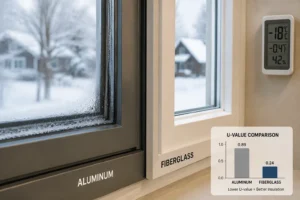
Awning vs Casement Windows What’s the Difference and Which Wins
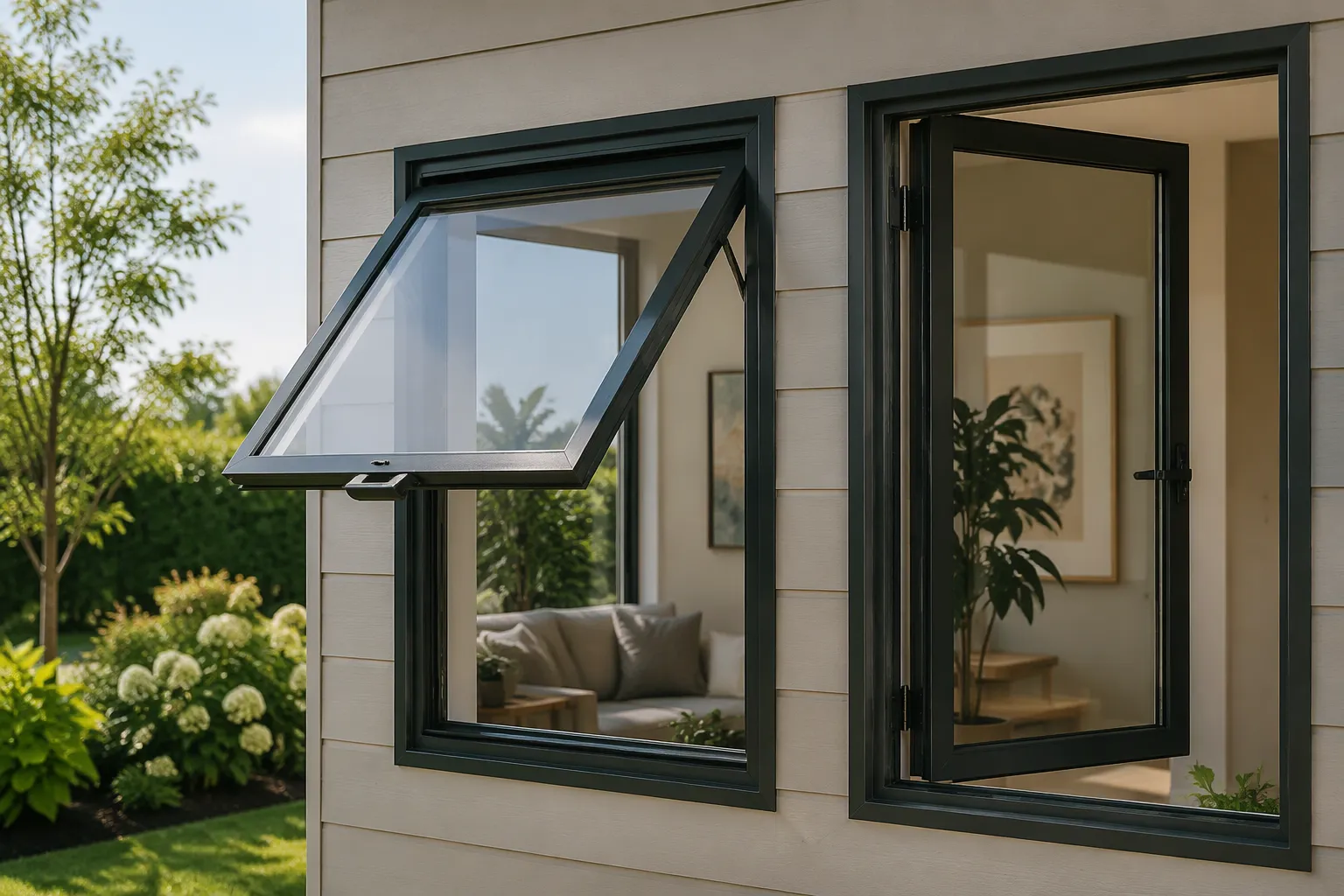
The core difference comes down to hinge location. Awning windows hinge at the top and push outward from the bottom. Casement windows hinge on the side and swing outward like a door. Quick verdict: awning wins for rainy climates, basements, and hard-to-reach spots; casement wins for maximum breeze, egress, and views. So which one should you actually buy? That depends on your climate, room shape, and priorities. This awning vs casement windows breakdown stays fair and practical. ZEKIN offers both awning and casement windows, so you get an honest comparison rather than a sales pitch.
Key Takeaways
- Awning windows hinge at the top and open outward from the bottom, while casement windows hinge on the side and swing out like a door.
- Casement windows capture more breeze and offer a clearer view, but awning windows let you ventilate during light rain.
- Casement windows meet egress codes for emergency escape, but awning windows fit tight spaces and stay open in bad weather.
- Choose awning windows for rainy climates, basements, and above sinks; choose casement windows for living rooms, bedrooms, and tall narrow openings.
- Both styles seal tightly and save energy, so pick based on your top priority: weather protection, airflow, view, or budget.
What’s the Difference Between Awning and Casement Windows
You can spot the main differences between these two styles in about five seconds. The location of the hinge tells you everything. One window opens from the bottom, the other opens from the side. That single design choice shapes ventilation, weather protection, cleaning, and even the size you can order.
Awning Windows: Top-Hinged and Crank-Operated
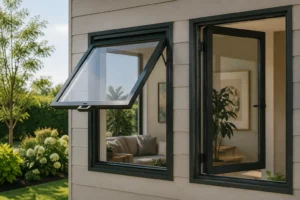
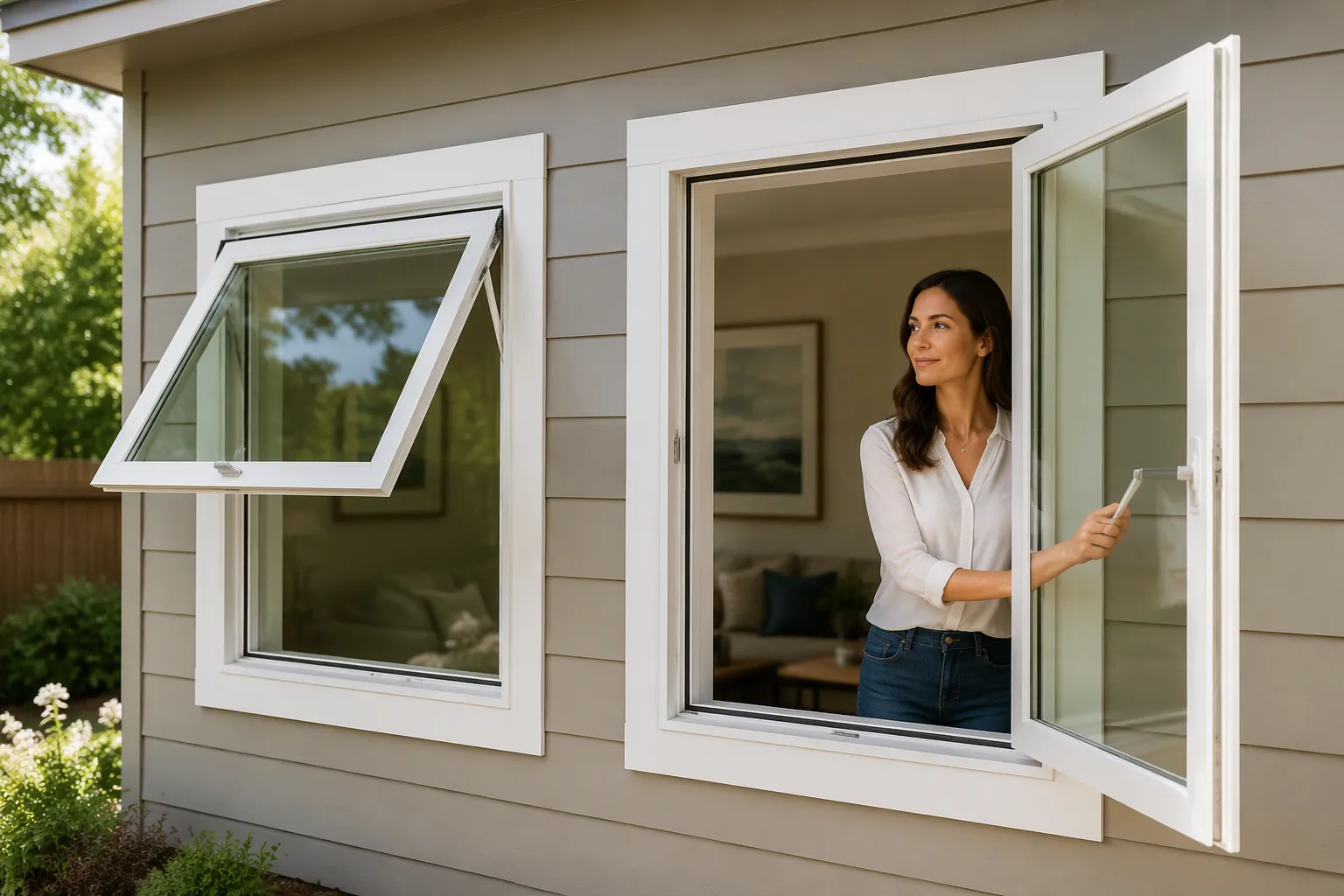
Awning windows carry a top hinge. The sash stays attached along its upper edge, and the bottom edge pushes outward. You open them with a crank, which is why people call them hinged, crank-style windows. Here is how the mechanism works, according to Metro Detroit Window:
Turning the crank handle turns a gear inside the operator, the mechanism at the bottom of the window. The operator moves an arm, and the arm pushes the sash open or pulls it closed.
Each unit uses a single sash, meaning one solid panel of glass with no sliding or stacking partner. A single-hung window, by contrast, has two sashes, but normally the top sash is fixed and only the bottom sash slides, as Wikipedia explains. Awning windows usually run wider than they are tall. Dimensions.com lists typical widths and heights from 1’6″ to 5′ (45.7–152.4 cm), so the size range stays fairly limited.
Casement Windows: Side-Hinged and Swing-Out
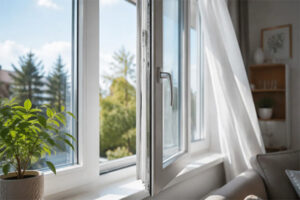
Casement windows are the classic side-hinged window. They hinge on the side and swing outward like a door, and you can mount that hinge on the left or right. This is how each window style operates in the simplest terms: awning lifts from the bottom, casement swings from the edge. Casement aluminium windows typically run taller than they are wide, which makes them a natural fit for narrow wall spaces. Understanding what’s the difference between awning and casement windows really comes down to that hinge line, and the awning vs. casement window differences flow from it.
Awning vs Casement Windows: Side-by-Side Comparison
Quick-Reference Comparison Table
The table below lines up the main differences between awning vs casement windows in one place. Scan the rows that matter most to your room.
| Feature | Awning Windows | Casement Windows |
|---|---|---|
| Hinge location | Top edge | Left or right side |
| Opening direction | Bottom pushes outward | Sash swings out like a door |
| Ventilation | Controlled airflow, angled upward | Full breeze capture, directs air inward |
| Weather protection | Stays open in light to moderate rain | Usually closes during rain |
| Ease of cleaning | Hard to reach outside glass from inside | Sash swings wide, easier inside reach |
| View obstruction | Sash tilts into the upper view line | Sash clears to the side |
| Security | Tight seal when closed | Crank and lock reachable only from inside |
| Screen placement | Interior or exterior flanged screens | Interior or exterior, plus retractable roll-up options |
| Egress | Rarely rated for escape | Meets egress in smaller rough openings |
| Typical shape and size | Wider than tall, limited range | Taller than wide, narrow openings |
Key Takeaways From the Comparison
Casement windows block less of your view. The sash swings clear to the side, so the glass opening stays open to the eye. Awning windows tilt the sash into the upper sightline, which trims the view a little.
Awning windows save indoor space. Because they open outward, they take up no room inside your home, as Teza Doors notes. You can push furniture or curtains right up to the frame. That makes them a smart pick for small rooms and tight spaces.
Egress is where casement windows pull ahead. Building code sets a minimum net clear opening of 5.7 square feet, with at least 24 inches of height and 20 inches of width, per HomeGenius Exteriors. A 36 by 48 casement clears that easily. Even a 36 by 36 unit usually passes, since the whole sash swings clear and only the frame is deducted. Confirm the manufacturer’s published clear-opening figure for your exact model.
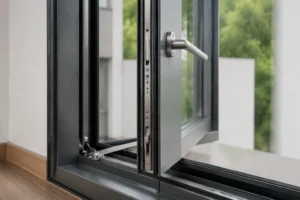
Security favors both styles, in different ways. Awning windows close tightly and create a seal that adds security and energy efficiency, according to Pella Omaha. Casement windows rank among the most secure types because the opening mechanism sits only on the inside. Stanek Windows adds that crank windows can use a multi-point locking system, where one handle engages several locks on the frame.
Screens work on both. Sun Windows lists flanged roll-form and flex screens for casement and awning windows, while retractable roll-up screens fit casement windows only. Cleaning splits the pair too. Casement windows open fully, so exterior glass is easy to wipe from indoors. Awning windows angle the outside pane away from you, so they are harder to clean from inside. Weigh these casement versus awning windows trade-offs against how often you clean and how much view you want.
Casement Windows vs. Awning Windows: Ventilation
Casement Windows and Full Breeze Capture
A casement sash swings all the way open, so almost the entire window opening lets air through. That wide clearance is why modern aluminium casement windows perform so well on a wall that faces a side breeze. The open sash acts like a scoop. It catches moving air and funnels it into the room, a trick the industry calls the scoop effect, according to Nest Exteriors. On a wall perpendicular to the prevailing breeze, a casement can pull in significantly more air than a double-hung window.
You can also angle the sash to steer a breeze exactly where you want it. Point it toward a sofa or a bed, and the airflow follows. This flexibility makes casement windows a strong pick for living rooms and bedrooms on warm days. When you weigh casement vs awning windows on airflow alone, the side-hinged design usually wins.
Awning Windows and Controlled, Rain-Safe Airflow
Awning windows work differently. The top hinge turns the open sash into a small canopy over the opening. Rain runs off the angled glass and frame instead of entering the room, as Soundview Window & Door explains. That shield lets you keep the window open during light rain and still enjoy fresh air. Everywindow.com describes the same effect as a funnel that draws fresh air in from the bottom while pushing stale air out.
The design has limits. Wind direction, rainfall intensity, and how far you open the sash all affect whether water reaches the opening. Andersen advises closing awning windows during severe weather or wind-driven rain. Some models even add a moisture sensor that shuts the window automatically when rain arrives.
So which one provides better ventilation? Casement windows move more air. Awning windows move air more safely. Both casement and awning windows suit bathrooms and other spaces that need steady ventilation, and both let you crack them open for privacy while natural light pours in.
Awning vs. Casement Windows: Energy Efficiency
Why Single-Sash Design Seals Tightly
Both styles rank among the most efficient operable windows you can buy. The reason is simple. Each one uses a single sash that presses directly against the frame when you close it. Sliding and hung windows rely on a track and friction to stay sealed. A crank mechanism compresses the sash against the weatherstripping instead, and that compression creates a tighter barrier against air infiltration, as Torwin explains.
The numbers back this up. According to the NFRC, air leakage ratings for casement and awning windows typically range from 0.1 to 0.2, which is excellent.
| Window Type | Air Leakage Rating (NFRC) |
|---|---|
| Casement and awning windows | 0.1 to 0.2 |
| Sliding and hung windows | 0.2 to 0.3 |
You can push performance further with energy-efficient glass packages. Modern aluminium casement windows, for example, pair that tight compression seal with insulated glazing for strong thermal results.
Rainy and Windy Climates: The Awning Edge
Here is the trade-off. Casement windows prioritize airflow and access. Awning windows prioritize weather protection and controlled ventilation. A top-hinged sash sheds rain while it stays open, and the seals press tighter when wind pushes against them.
Testing supports the claim. Awning windows reach Class 9 under EN 12208, which corresponds to resistance at 600 Pa — roughly severe wind-driven rain against a facade. The air-tightness benchmark of 0.3 cfm/ft² at 75 Pa comes from ASTM E283, referenced by FGIA/AAMA/WDMA/CSA 101/I.S.2/A440.
So which one performs better in the Mississippi climate? The Gulf Coast brings humidity, thunderstorms, and hurricane season. That makes awning windows in Mississippi a smart fit for covered porches and rainy-day ventilation. Casement windows in Mississippi still perform well thermally when installed with quality weatherstripping. Weigh casement vs awning windows on your local weather patterns, and the awning vs. casement windows decision gets much clearer. Either way, casement and awning windows both deliver excellent efficiency.
Best Rooms and Applications for Each Style
Where Awning Windows Shine
The best places for awning windows are spots where a swinging sash would get in the way. Avi Windows and Doors recommends them for small spaces, since the window takes up little room and never swings inward. You can push a sofa, a cabinet, or a curtain right up to the frame.
Hard-to-reach locations suit this style well. Consider these spots:
- Over sinks and counters, where there is no room to swing or slide a window open
- Kitchens and bathrooms, two of the most popular rooms for this style
- Utility rooms above laundry machines
- Bedrooms above dressers
- Basements, where they offer great security
- Above a picture window, adding ventilation without breaking up the view
Express Kitchens makes the same point about placement above sinks, countertops, or larger windows. For bathrooms, ask about frosted or sandblasted glass for privacy. Tempered glass makes sense over a tub or shower. These benefits of awning windows come down to one idea: air moves, rain stays out, and nothing blocks your floor plan.
Where Casement Windows Shine
The best places for casement windows are living rooms and bedrooms. Locktight Impact explains that in these rooms, casement windows offer unobstructed views and natural light. Their wide opening lets a refreshing breeze flow through, which creates a comfortable, inviting atmosphere. That wide swing is the heart of the benefits of casement windows.
Tall, narrow wall spaces also favor this design, and egress points need it. Custom aluminum casement windows let you match those odd openings exactly, so you get the size and finish your room requires. Weigh the awning vs. casement windows question room by room, and the casement vs. awning windows choice often settles itself. Both casement and awning windows handle ventilation well, so pick the style that fits your layout.
Cost, Installation, and Maintenance
Price Ranges and Cost Drivers
Budget matters, so start with the numbers. Most homeowners pay between $400 and $900 per awning window when replacing an existing unit, according to Consumer Affairs. Budget-friendly installation can run as little as $300, while high-end projects reach as much as $1,800.
Casement windows cost more on average. NG Windows reports an installed cost of $700 to $2,100+ per unit, and Andersen casement windows run $400 to $2,000 installed because of added hardware and sealing. Economy vinyl sits around $700 to $1,100, fiberglass climbs to $1,600 to $2,100, and wood composite or clad units reach $1,900 to $2,300.
Size limits drive the gap. Awning windows cap out at smaller dimensions, so you buy less glass and less frame. Casement windows use a crank, hinges, and a multi-point lock, and that hardware adds to the price. Run a cost comparison on your actual room sizes before you decide.
Cleaning, Hardware Care, and Long-Term Upkeep
Cleaning access splits the pair. A casement sash swings fully open, so you can reach the outside glass from indoors. An awning sash only tilts, which leaves the outer pane angled away from your hand. Plan on a long-handled squeegee for awning windows on upper floors.
Hardware care keeps both styles working smoothly. Home Build Windows recommends monthly cleaning of glass, frames, and tracks. Twice a year, in spring and fall, deep clean and lubricate all moving parts with a silicone-based spray. Once a year, inspect the weatherstripping, test the hardware, and check for wear. Use silicone, not oil, and open and close the window several times to spread it.
Tighten loose hinge screws and adjust the crank per the owner’s manual. ZEKIN can advise on hardware care for casement and awning windows, including how to keep casement aluminium windows sealing tightly season after season.
Which One Should You Choose?
Match the Window to Your Priorities
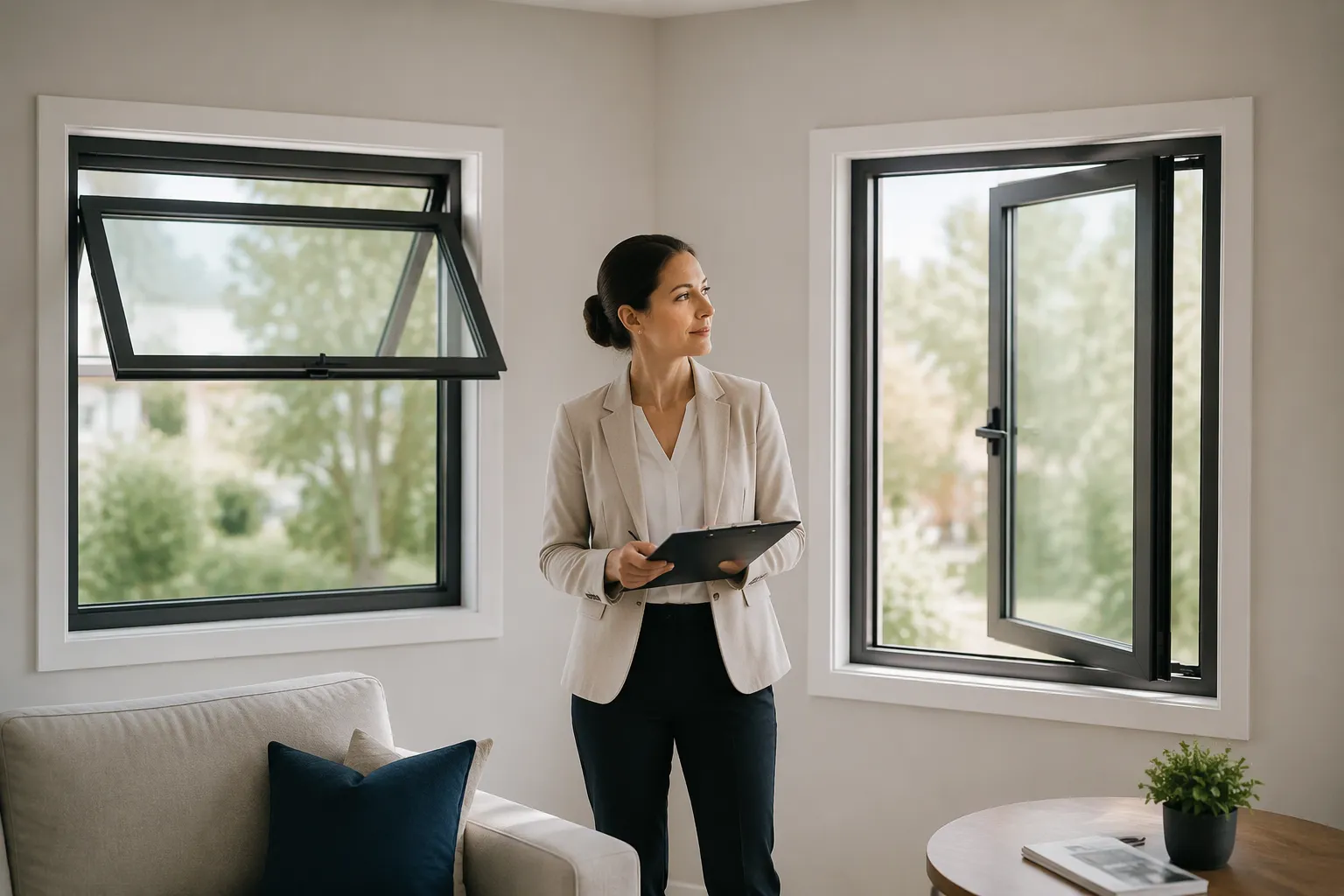
You now have the full picture. The real question is which one should you choose for your home. Start with your top priority, then let the rest of the list confirm or challenge that pick.
- Weather protection first? Go with awning windows. The top-hinged sash acts as an overhead shield, so you can leave it open during light rain without direct water intrusion, as PRL Glass notes. That matters in humid, storm-prone regions.
- Maximum breeze first? Go with casement windows. The side-hinged sash works like a sail and captures lateral air currents, which gives you a more direct and higher volume of airflow, according to PRL Glass.
- Egress first? Casement wins. A full swinging sash clears the opening, and the earlier comparison showed how easily a standard casement meets the 5.7 square foot net clear opening rule.
- View first? Casement again. The sash swings clear to the side, so it blocks less of your sightline.
- Budget first? Awning windows usually cost less per unit, mostly because they cap out at smaller sizes and use simpler hardware.
- Cleaning access first? Casement takes it. The sash opens wide enough to reach the outside glass from indoors.
Before you lock in a style, walk through each opening in your home and define its job. Skyland Building suggests a simple sequence: decide whether the opening is mainly for view and daylight, for ventilation, for access and cleaning, or for safety and security. Then check clearance for furniture, curtains, screens, and the full sash path. Finally, match the style to the room. A living room may want a fixed picture window paired with a casement section. A bathroom often suits an awning or a clerestory unit. A basement needs a code-compliant option where local rules permit one.
Climate deserves its own pass. PRL Glass lays out the split clearly:
| Climate Factor | Casement Windows | Awning Windows |
|---|---|---|
| Airflow direction | Side-hinged; capture and redirect lateral breezes with higher volume | Top-hinged; stable downward airflow, smaller opening angle |
| Rain protection | No protection while open; close during storms | Sash acts as an overhead shield; stays open in light rain |
| Wind exposure | Wide openings need careful sizing and quality hinges | Less ideal in high-wind zones; the open sash can catch gusts |
| Energy performance | Compression sealing limits air infiltration | Compression sealing limits air infiltration |
Notice the last row. PRL Glass rates the two styles as similar on energy performance when both are properly engineered. Glass quality, a thermal break in the aluminum profile, seal quality, and installation precision drive efficiency far more than hinge placement does. So do not pick a style on efficiency alone. Pick it on how you will use the window.
How ZEKIN Helps You Decide
A framework gets you close. A real room and a real climate get you the rest of the way. That is where the ZEKIN team comes in.
Tell us the room, the wall dimensions, and your local weather patterns. We will walk you through the awning vs casement windows trade-offs for that exact spot. Maybe you have a wide, short opening above a kitchen sink. Maybe you have a tall, narrow bedroom wall that needs an escape route. Each case points to a different answer, and we will say so plainly.
We also build to your measurements. Our custom aluminum casement windows let you match an odd opening precisely, so you get the size, finish, and hardware your room requires. If you are weighing casement and awning windows for a coastal property, we can talk through impact-rated options and reinforced hardware for high-wind exposure. If you are outfitting a bathroom or basement, we can point you toward the style that fits the clearance and code rules.
You get one more thing from us: an honest comparison. We offer both awning and casement windows, so our recommendation follows your priorities, not our inventory. Bring us your list. We will help you turn it into a specification you can check.
Awning windows win for rain-prone climates, basements, small or high openings, and ventilation without weather worries. Casement windows win for maximum airflow, emergency escape, less view obstruction, and tall, narrow openings. So the awning vs casement windows call comes down to your room, not a universal winner.
Run this quick checklist against your top priority:
- Weather protection: pick awning.
- Breeze: pick casement.
- Egress: pick casement.
- View: pick casement.
- Budget: pick awning.
- Cleaning access: pick casement.
Either way, you get a tight-sealing, efficient window. Explore ZEKIN’s awning and casement windows today, and let our team match casement and awning windows to every opening in your home.
FAQ
Can you leave awning windows open in the rain?
Yes, for light rain. The top-hinged sash acts like a small roof, so water runs off the glass instead of into the room. Close them during heavy or wind-driven storms, though. Some models even offer a moisture sensor that shuts the window on its own.
Which style gives you more airflow?
Casement windows win on raw volume. The sash swings wide and scoops side breezes into the room. Awning windows trade some of that volume for rain protection. Both styles ventilate bathrooms and kitchens well, so match the pick to your weather.
Are awning windows a good choice for basements?
They are a strong fit. The sash never swings inward, so it stays clear of furniture and walkways. The tight compression seal also adds security down low. Just confirm your local code allows the style where you plan to install it.
Which one is easier to clean?
Casement windows take the edge. The sash swings fully open, so you can reach the outside glass from indoors. Awning windows only tilt, which leaves the outer pane angled away. Keep a long-handled squeegee handy for upper floors.
Can you mix both styles in one home?
Absolutely. Many homeowners pair them room by room. Put awning windows above sinks, in bathrooms, and in basements. Use casement windows in living rooms, bedrooms, and any spot that needs an escape route. ZEKIN builds both, so one supplier can cover every opening.