What Are the Pros and Cons of Casement Windows?
Casement windows are side-hinged units. A crank or lever swings the sash outward like a door. This guide offers a balanced look at the pros and cons of casement windows. You will see how this style fits your home, climate, and budget. We weigh ventilation, energy efficiency, cost, security, and maintenance. You will also learn about size limits and AC compatibility. ZEKIN builds casement windows alongside other styles, so treat this as an unbiased buying guide. This style suits many homes, yet it is not the only smart choice. Every window style has trade-offs, and this one is no exception. Read on before you decide.
Key Takeaways
- Casement windows swing open wide to let in lots of fresh air and give you clear views.
- They seal tightly to keep your home comfortable and save money on energy bills.
- Casement windows cost more and have size limits, so plan your budget and space.
- You need to keep the area outside clear for the window to open fully.
- Check your cooling setup first because window AC units often don’t fit casement windows.
What Are Casement Windows?
A Simple Definition
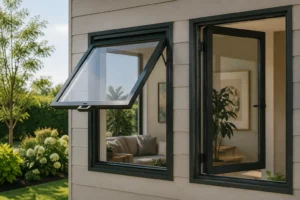
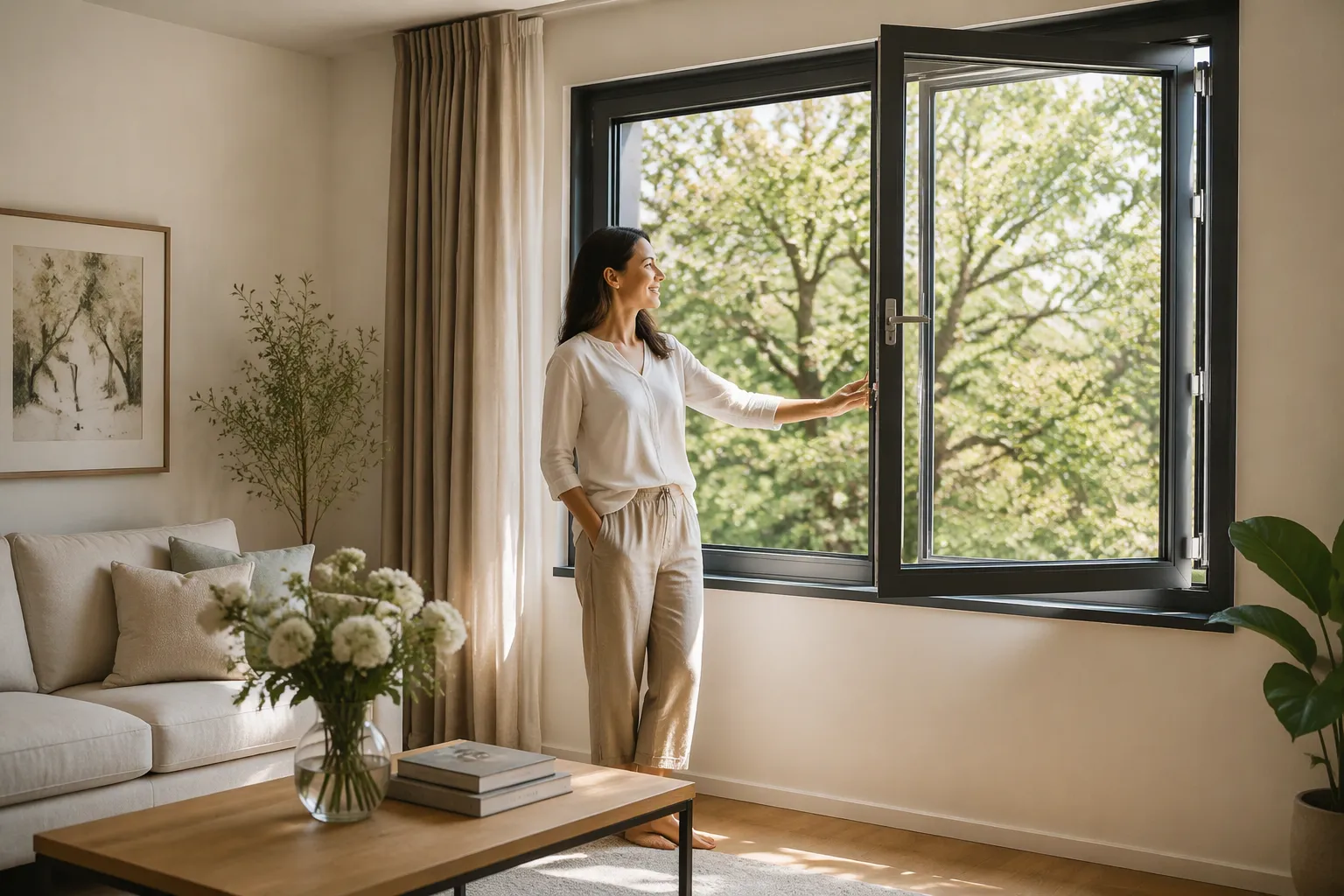
A casement window has a sash hinged on one side. You open it by turning a crank, and the sash swings outward. In short, casement windows swing open like a door and seal shut against the frame. A lever lock pulls the sash tight when you close it.
Manufacturers build casement windows in wood, vinyl, aluminum, and fiberglass. Aluminum frames suit humid climates well, and aluminum casement windows stay light and resist rust. ZEKIN makes casement windows among several window styles, so you can compare options from one source.
How They Compare to Other Styles
Double-hung windows use two sashes that slide up and down. Window World notes that an open casement can act like a sail, catching wind that runs along the building and pulling it inside. A double-hung window keeps a meeting rail across the middle, and that rail breaks up the view.
| Feature | Casement Windows | Double-Hung Windows |
|---|---|---|
| Operation | Side hinge; a crank and lever lock control the sash | Upper and lower sashes slide vertically |
| Ventilation | The full sash opens and catches cross breezes | The meeting rail limits airflow and view |
| Ease of use | A fold-out crank handle is easy on windows you open daily | You raise and lower sashes by hand |
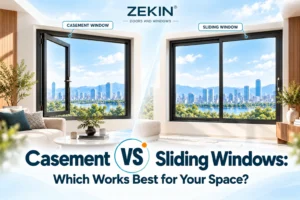
Sliding windows glide along a track and need little clearance. Aplapollo Windows calls them a wise choice for tight spaces and high-rise buildings. Lake Washington Windows adds that sliding windows have fewer moving parts and no hinges or cranks. Each style fits a different situation, and no single option wins everywhere.
The Pros and Cons of Casement Windows at a Glance
Strong Airflow and Ventilation
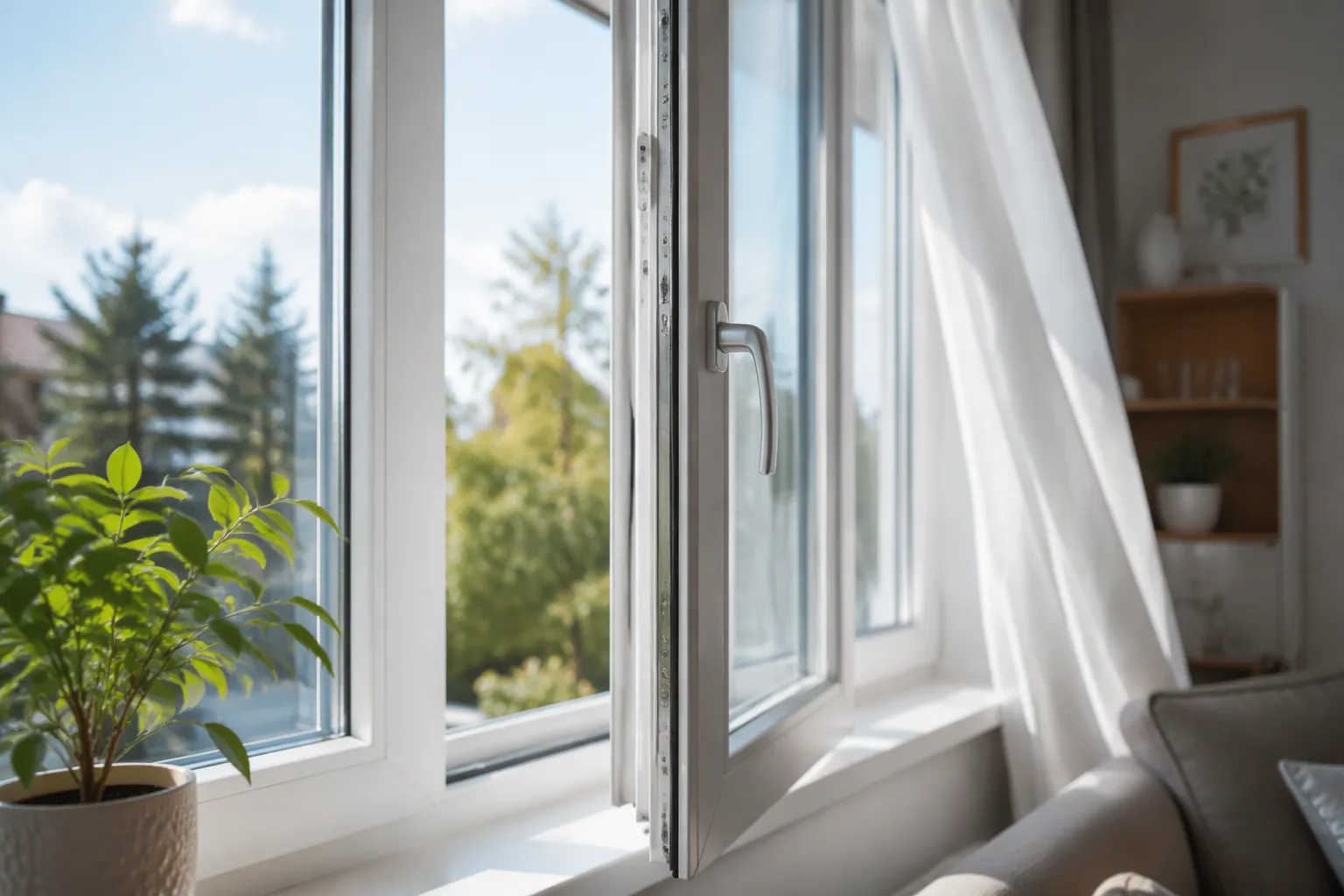
A casement sash swings wide open, and that full opening changes how air moves through a room. The sash catches side breezes and directs them indoors. Locktight Impact explains that this design delivers maximum ventilation and excellent sightlines. A double-hung window may only open halfway, and a sliding window typically does not open as wide. Those limits reduce the volume of fresh air that enters your home.
This is why the pros of casement windows start with airflow. You get maximum ventilation and airflow in living rooms, kitchens, and bathrooms, where stale air and moisture build up fast. An open casement acts like a sail and pulls in outside air along the wall. The result is great airflow without any powered fan. Homeowners who want strong ventilation and airflow from a single sash will notice the difference on a mild day.
Tight Seals and Energy Savings
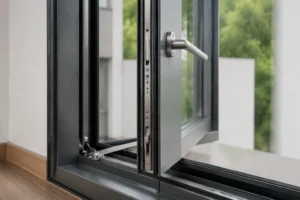
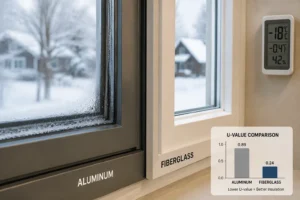
A closed casement presses its sash firmly against the frame. The lever lock pulls the sash inward, and the weatherstripping compresses along the full perimeter. That firm seal blocks drafts and supports great thermal insulation. Cunningham Door reports that casement air leakage rates typically run around 0.01 to 0.05 cubic feet per minute per square foot, compared with 0.05 to 0.30 for double-hung windows. A Passive House blog also lists Loewen casement windows at 0.1 cfm/ft² at 75 Pa under ASTM E283.
These figures show why energy efficiency ranks among the top benefits of casement windows. A tight seal keeps heated air inside during winter and cooled air inside during summer. You spend less on heating and cooling over time. Insulated glass and quality weatherstripping strengthen the effect. The benefits compound: fresh air, energy savings, and clear views all come from one well-built unit.
The pros of casement windows also include unobstructed views. A single sash has no meeting rail across the middle. You get clean sightlines and more natural light. The slim frame looks sleek and modern, and it suits almost any home style. An energy efficient casement adds comfort without visual clutter.
These advantages make a strong case for the style. The pros and cons of casement windows do not end here, though. Later sections cover cost, size limits, cleaning access, and clearance needs. Weigh both sides before you commit.
More Advantages and Disadvantages of Casement Windows
Security and Easy Operation
A casement window gives you strong security. A single interior handle activates multiple independent locking points along the frame, according to Opuomendw. An intruder must defeat every point at once. The force spreads evenly around the perimeter, so the sash will not separate from the frame without loud, slow structural damage. The lock hardware sits inside the frame, and the crank mechanism stays hidden from outside. You cannot reach the hinges or pins when the window is closed. Toughened or laminated glass keeps the barrier intact after repeated strikes.
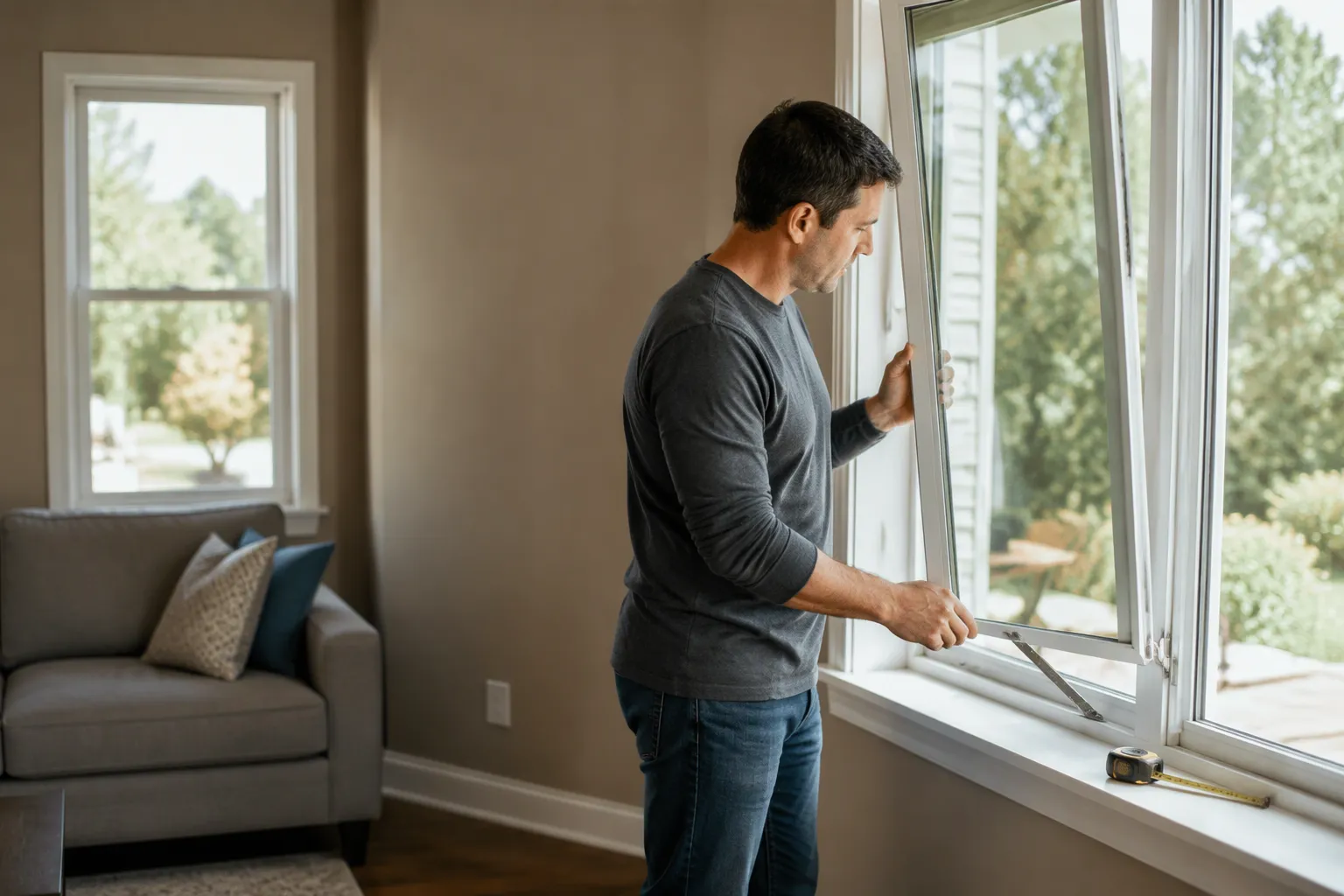
Operation stays simple for most people. You turn the crank handle, and the sash glides outward with little effort. Older users and anyone with limited grip strength often find this easier than lifting a heavy double-hung sash. Routine care matters, though. Check hinges, locks, and operators once or twice a year, and apply a silicone-based spray lubricant sparingly. Tighten loose screws and replace worn parts promptly.
Cleaning and Maintenance Realities
Interior cleaning is simple. You wash the glass from inside your room with no sash in the way. Exterior access depends on your setup. Window World notes that the outside of a casement is harder to reach than a double-hung unit with tilt-in access. Many modern units let you open the sash fully and reach between the frame and sash to wash the exterior from inside. Renewal by Andersen puts it plainly:
And depending on the style and brand of your windows—you might not even need a ladder.
Screen installation adds another wrinkle. The hinge design means screens usually mount on the interior side, and Window World warns that people or pets may rub against them there. Store screens out of season if that becomes a problem.
Weigh these points against the pros of casement windows. The cons of casement windows here are modest, yet real. Exterior cleaning effort and screen placement belong on your checklist. The advantages and disadvantages of casement windows balance out differently for every home. Understanding the pros and cons of casement windows means accepting small trade-offs like these. The benefits of tight seals and easy cranking still hold. Review the pros and cons of casement windows with your own access and maintenance habits in mind.
Key Disadvantages of Casement Windows
Cost, Size Limits, and Hardware Wear
Price tops the list of cons of casement windows for many buyers. Roofing MN reports that casement units typically cost 10-30% more than double-hung windows. In the Twin Cities market, materials plus standard installation run $300 to $900 per casement window, against $250 to $600 for double-hung. Pella Omaha lists a single-wide casement at $722.77 and a comparable double-hung at $903.16, so the gap narrows in some product lines. Fiberglass versions land close together at $935.80 and $942.07. Casement window installation also demands precise framing, and that labor adds to the bill.
| Comparison | Casement Windows | Double-Hung Windows |
|---|---|---|
| Cost vs. double-hung | Typically 10-30% more | Baseline |
| Twin Cities cost per window | $300 to $900 | $250 to $600 |
| Pella Omaha single-wide | $722.77 | $903.16 |
Size caps create another of the common disadvantages of casement windows. Hotian Windows puts the maximum standard size near 36 inches wide and 72 inches high. Wider sashes strain the hinges. Material matters here, per Derchi Door: vinyl tops out around 36-40 inches, aluminum reaches 42-48 inches, wood spans 36-44 inches, and fiberglass handles 44-48 inches. Most makers stop at 48 inches, and custom aluminum casement windows can reach 60 inches with reinforced frames and heavy-duty hinges.
Hardware wear deserves honest mention among the cons of casement windows. Crank operators, hinges, and locking mechanisms carry moving parts, and many units need hardware attention after roughly 40 years. Treat this as a maintenance note, not a dealbreaker. Regular lubrication and prompt part replacement keep a casement working smoothly for decades.
Clearance and AC Compatibility
An outward-swinging sash needs open space beyond the wall. You cannot park a sofa against the frame or plant a hedge tight to the glass. Landscaping and furniture layouts must leave room for the full swing. Plan this during design, because a blocked sash defeats the ventilation benefits you paid for.
Cooling poses a bigger hurdle. You can’t use window AC units in most standard casement frames, since the sash swings out and leaves no stable platform. National Air Warehouse notes that standard rectangular units may not fit, yet purpose-built casement ACs exist for narrow openings. These units stay under 15 inches wide, and the crank window installation kit adds about an inch, so the industry standard calls for a 15½-inch minimum window width. Capacity tops out near 8,000 to 10,000 BTUs, well below the 15,000 BTUs of standard window units. Martinson Manufacturing builds custom inserts for crank-out windows where standard kits fail. Central air or a ductless mini-split sidesteps the issue entirely.
Weigh these cons of casement windows against the pros and cons of casement windows covered earlier. The cons of casement windows center on money, space, and cooling setup. None of them rules out the style. The pros and cons of casement windows simply ask you to plan ahead. Understanding the disadvantages of casement windows early makes that planning easier.
Are Casement Windows Right for Your Home?
Best-Fit Scenarios
You get the most from residential casement windows in rooms that need strong airflow and clear views. Acre Windows lists kitchens, living rooms, bedrooms, and hard-to-reach spots above sinks or countertops as popular choices. A crank handle beats lifting a sash when the window sits over a counter. Kitchens gain a bonus: an outward-opening sash creates a funnel effect that pulls smoke, steam, and odors outside.
Climate matters too. 1st Choice Windows and Siding notes that Colorado’s Front Range and mountain regions face powerful winds, and a casement’s compression seal presses the sash against the weatherstripping around the entire frame. That tight barrier resists air infiltration even in sustained winds. Some Colorado building codes call for higher Design Pressure ratings for this reason. The table below shows where the style performs well.
| Region/Climate | Conditions | Recommended Solution |
|---|---|---|
| Florida | Hurricanes, humidity, coastal air | Wind pressure resistance, impact performance |
| Europe | Thermal insulation focus | Thermal break aluminum, high-performance glazing |
| Middle East | Extreme heat, strong sun | Thermal break aluminum, Low-E glass |
| Colorado (USA) | Powerful winds | Higher Design Pressure ratings, compression seal |
You should also accept routine hardware checks. Lubricate hinges and operators yearly, and the benefits of casement windows last for decades.
When Another Style Fits Better
Some situations favor a different window. Very wide openings exceed casement size caps, and casement window installation then demands multiple units or another style. Rooms that need a window AC unit also struggle, since the outward sash leaves no stable platform.
Tight exterior clearance is another signal. Smart Window Company points out that sliding windows operate within the frame, so they suit areas with limited exterior space. Sliding units also bring fewer moving parts and minimal maintenance, and they deliver wide, clear views. Double-hung windows remain a solid pick where tilt-in cleaning access matters most.
ZEKIN offers casement windows and other styles, so you can match the window to your rooms, climate, and cooling setup. Weigh the benefits against your own space before you choose.
Casement windows deliver strong ventilation, energy efficiency, security, and clear views. They also bring higher cost, size limits, exterior cleaning effort, and clearance needs. Weigh those pros and cons against your own home.
Run a quick checklist. Consider your climate, budget, wall and exterior space, AC setup, and willingness to maintain hardware. The cons of casement windows shrink when you plan for them. The pros of casement windows reward rooms that need airflow and tight seals. Residential casement windows suit many spaces, yet another style may fit better.
ZEKIN builds casement windows and other styles. Match the window to your home, not the reverse.
FAQ
Do casement windows really save energy?
Yes. A closed sash presses tight against the frame, and that firm seal blocks drafts. Air leakage typically runs around 0.01 to 0.05 cubic feet per minute per square foot. Double-hung units often leak more. You spend less on heating and cooling over time.
Which frame material should you pick?
Wood, vinyl, aluminum, and fiberglass all work. Aluminium casement windows stay light and resist rust, so they suit humid climates well. Fiberglass handles wider sashes than vinyl. Match the material to your climate and your budget.
Can you fit very wide openings with this style?
Standard units top out near 36 inches wide and 72 inches high. Wider sashes strain the hinges. Custom aluminum casement windows can reach 60 inches with reinforced frames and heavy-duty hinges. For very wide walls, plan multiple units or another style.
How long does the hardware last?
Crank operators, hinges, and locks carry moving parts. Many units need hardware attention after roughly 40 years. Lubricate the moving parts yearly and replace worn pieces promptly. Regular care keeps a casement working smoothly for decades.
Do residential casement windows work with window AC units?
Usually not. The outward-swinging sash leaves no stable platform. Purpose-built casement ACs exist for narrow openings, and they need a 15½-inch minimum width. Central air or a ductless mini-split sidesteps the issue entirely.